Author: Team OZi

  • Top 10 Toy Companies in India (2026): The Ultimate Shopping Guide for Parents

    Top 10 Toy Companies in India (2026): The Ultimate Shopping Guide for Parents

    Choosing the right toy in India has become much more than just a quick trip to the store. Today, parents see play as a key part of how a child grows, learns, and discovers the world. This shift in mindset has helped the Indian toy industry grow into a $1.5 billion market where the focus has shifted toward high safety standards, durability, and real educational value.

    Families across the country are now looking for brands that meet global safety standards and offer more than just basic entertainment. From trusted Indian manufacturers to iconic global brands, there is now a massive variety of options designed to help kids develop everything from coordination to problem-solving. Whether it’s a wooden puzzle or a high-tech robot, the focus is now on toys that are durable, safe, and genuinely engaging.

    Top 10 Toy Companies in India

    Here is a look at the top toy companies in India that are leading the way in 2026.

    1. Funskool India Ltd.

    Owned by the MRF Group, Funskool is the most recognized name in the Indian toy scene. Funskool has built a reputation for creating products that survive the test of time in Indian households. They are the go-to brand for parents who want international quality without the premium import price tag, offering everything from infant teethers to complex family strategy games. 

    • Top Products: Giggles for infants, Handycrafts DIY kits, and Fundough.
    • Best For: A wide variety of safe, affordable toys for all ages.

    2. Hasbro India

    Hasbro is the powerhouse behind some of the most recognizable movie and TV franchises in the world. Their presence in India has grown massively because they focus on ‘high-energy’ play, toys that get kids off the couch and interacting with their friends through competition and roleplay. 

    • Top Products: Nerf blasters, Transformers, Play-Doh, and Marvel action figures.
    • Best For: Social play, competitive games, and superhero fans.

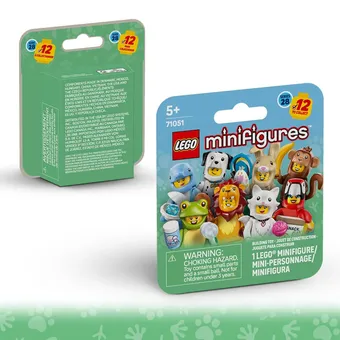
    3. LEGO India Pvt. Ltd.

    LEGO has become a staple in Indian homes for its ability to keep children (and adults) engaged for hours. The brand is legendary for its ‘system of play,’ where every piece is designed to spark logical thinking and patience, making it a favorite for parents focusing on cognitive development. 

    • Top Products: LEGO City, LEGO Ninjago, and the complex LEGO Technic series.
    • Best For: Creativity, engineering skills, and ‘Kidult’ collectors.

    4. Hamleys (India) Pvt. Ltd.

    Hamleys is synonymous with the ‘magic’ of a toy store, and their branded products carry that same sense of wonder. They focus on the luxury segment of the market, offering toys that feel like special keepsakes rather than just temporary distractions. 

    • Top Products: Iconic Hamleys Teddy Bears, high-speed RC cars, and magic sets.
    • Best For: Luxury gifting and high-quality soft toys.

    5. Mattel India (Barbie & Hot Wheels)

    Mattel remains a titan in India, particularly through its two most famous brands: Barbie and Hot Wheels. From the fashion runways of Barbie to the orange tracks of Hot Wheels, Mattel has defined childhood for generations in India. They are masters of creating ‘aspirational’ play, where kids can imagine themselves as anything from a race car driver to an astrophysicist. 

    • Top Products: Barbie dolls and playsets, Hot Wheels track sets, and Uno card games.
    • Best For: Fashion play and car enthusiasts.

    6. Fisher-Price

    Fisher-Price is often the very first brand a child interacts with. Their products are backed by decades of research into childhood milestones, ensuring that every rattle, walker, and block serves a specific purpose in a baby’s growth journey. As a subsidiary of Mattel, Fisher-Price focuses almost entirely on infants, toddlers, and preschoolers. 

    • Top Products: Laugh & Learn series, Thomas & Friends trains, and Little People playsets.
    • Best For: Baby development, sensory play, and motorized trains.

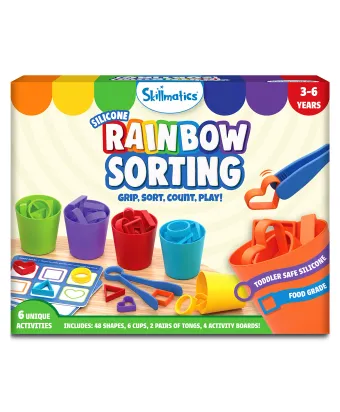
    7. Skillmatics

    An Indian success story that has gone global, Skillmatics focuses on pre-skill development through high-quality, reusable activity mats and brain-boosting games, proving that learning doesn’t have to be boring. They have reinvented the ‘activity kit’ by making them reusable and highly engaging, focusing on topics that help kids excel in the real world. 

    • Top Products: Guess in 10 card games and Write & Wipe activity mats.
    • Best For: Brain training, travel-friendly games, and classroom learning.

    8. Smartivity Labs

    Smartivity specializes in STEM-based DIY kits. Kids build their own working machines, like hydraulic cranes or catapults, using high-quality wooden parts. Their kits are essentially engineering lessons disguised as toys, teaching concepts like aerodynamics and mechanics through hands-on construction.

    • Top Products: Mechanical DIY Wooden Kits and Augmented Reality (AR) coloring sets.
    • Best For: Budding engineers and hands-on science lovers.

    9. Simba Toys India

    Part of the German Simba Dickie Group, this brand offers a massive range of toys that are famous for their European design sensibilities and durability. Simba brings a refined German design aesthetic to the Indian market. Known for their extreme durability, Simba toys are built to survive rough outdoor play and constant use, making them a favorite for parents looking for long-lasting value.

    • Top Products: Steffi Love dolls, Majorette die-cast cars, and Dickie Toys city vehicles (like fire trucks).
    • Best For: Durable plastic vehicles and fashion doll alternatives.

    10. Shumee

    Perfect for eco-conscious parents, Shumee produces handcrafted wooden toys that are 100% plastic-free and battery-free. By focusing on open-ended play with natural materials, they encourage kids to use their own imagination to drive the fun, rather than relying on flashing lights and sounds. 

    • Top Products: Wooden Rocking Horses, Activity Walkers, and Nesting Dolls.
    • Best For: Environmentally friendly toys and open-ended, sensory play

    Finding the right toy for your child is about more than just a quick purchase; it’s about choosing something that will actually hold their interest while being safe and sturdy. Whether your kid is obsessed with LEGO sets, loves the high-energy action of Hasbro, or you prefer the natural, eco-friendly feel of Shumee, picking a quality brand ensures they are getting the most out of their playtime.   

    Why wait for shipping when you can have the best toys in your hands today? Whether it’s a last-minute birthday present or a reward for a good school report, you can find all these top brands on the OZi App.

    Download now and get your favorite toys delivered to your door in just 60 minutes!

    Frequently Asked Questions

    1. Which are the top-rated toy brands for kids in India?

    The most trusted names include Funskool, LEGO, and Hasbro for a mix of creativity and action. For educational play, brands like Skillmatics and Smartivity are currently the leaders in STEM-based learning and activity kits.

    2. Are toys from Indian brands safe for infants and toddlers?

    Yes, all toys sold in India must now comply with strict BIS (Bureau of Indian Standards) regulations. Top brands like Funskool and Fisher-Price ensure their products are non-toxic, lead-free, and pass rigorous safety tests for children.

    3. Which toy categories are trending in India right now?

    STEM learning kits, sustainable wooden toys, and “Kidult” collectibles (for adults) are the fastest-growing categories. Parents are increasingly shifting toward screen-free play that focuses on logical thinking and motor skill development.

    4. How can I tell if a toy brand is high quality?

    Check for the ISI mark, which is a mandatory safety certification in India. Additionally, look for brands with high replay value—like LEGO or Smartivity—which are built with durable materials that can survive years of active use.
  • Baby Heat Rash: How to Prevent, Treat & Protect Your Baby’s Skin This Summer

    Baby Heat Rash: How to Prevent, Treat & Protect Your Baby’s Skin This Summer

    With the rising temperatures and humidity, summers can be tough on a baby’s delicate skin.  It’s common for them to develop heat rashes, redness or irritation especially in the areas like neck, back and folds of the skin. The tricky part? Babies can’t tell you what’s bothering them. What may look like a small rash can quickly turn into discomfort, making them fussy and restless. The good news is that most heat-related skin issues are preventable with a few simple changes in daily care. 

    From choosing the right clothes to keeping your baby cool and dry, small steps can make a big difference. In this guide, we’ll walk you through what causes heat rashes, how to prevent them, and what actually works to keep your baby comfortable all summer long.

    What Causes Heat Rashes in Babies?

    Heat rash, also known as prickly heat, happens when sweat gets trapped under the skin. Since a baby’s sweat glands are still developing, they can get blocked more easily leading to tiny red bumps, irritation, and itching. There can be common triggers causing summer heat rash in babies.

    • Excessive sweating: Hot weather or overdressing can cause babies to sweat more than usual.
    • Tight or non-breathable clothing: Synthetic fabrics trap heat and moisture.
    • Skin folds trapping moisture: Neck, thighs, and underarms are most prone.
    • Limited airflow: Poor ventilation worsens sweating and irritation.

    Baby skin rashes can usually look like small red of pink bumps with mild swelling or irritation. These are quite common on neck, chest, back and diaper area. Baby diaper rash or heat rash is common in summer as babies cannot regulate body temperature efficiently, making them more sensitive to heat and humidity.

    Choosing the Right Skincare for Summer

    Your baby’s skincare routine should adapt with the season. Summer calls for lighter, breathable, and non-irritating products. Here are some things you need to look for while buying the skincare for your babies in summer.

    • Water-based formulations that don’t clog pores
    • Fragrance-free products to avoid irritation
    • Dermatologically tested for sensitive skin
    • Non-comedogenic creams that allow skin to breathe

    Few things to avoid:

    • Heavy oils and thick creams
    • Products with alcohol or artificial fragrances
    • Over-layering multiple products

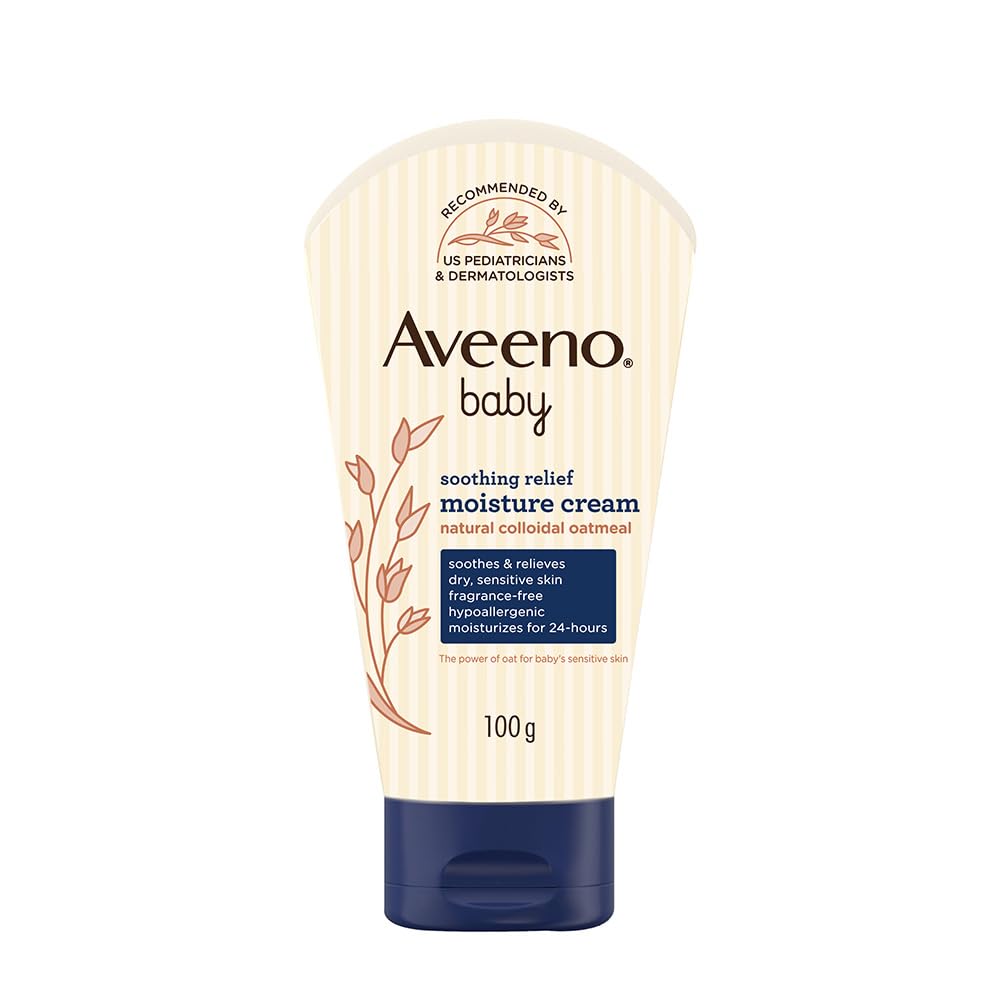
    Products That Help Soothe Baby Heat Rashes

    When baby skin rash appears, focus on cooling, calming, and protecting the skin barrier. Few effective options include:

    • Calamine-based lotions: Help reduce redness and itching
    • Aloe vera gels (baby-safe): Provide instant cooling
    • Lightweight baby powders: Absorb excess moisture (use sparingly)
    • Zinc oxide creams: Create a protective barrier

    Lukewarm baths and soft cotton cloth compress are natural remedies that usually help. Avoid experimenting with too many home remedies, especially on sensitive skin.

    Best Fabrics for Summer

    Light, breathable fabrics can make a big difference in keeping your baby comfortable during summer. The right material helps absorb sweat, improves airflow, and reduces the chances of heat rashes.

    Ideal fabrics:

    • Cotton: Breathable, soft, and absorbs sweat
    • Muslin: Lightweight and airy
    • Bamboo fabric: Naturally cooling and gentle

    What to avoid:

    • Polyester and synthetic blends
    • Tight-fitting clothes
    • Layering unnecessarily

    Simple Tips to Prevent Heat Rashes

    Prevention is always easier than treatment. A few small changes in your baby’s daily routine can go a long way in keeping their skin cool, dry, and irritation-free.

    Keep your baby cool: Make sure your baby stays in a well-ventilated environment throughout the day. Use fans or air conditioning to maintain a comfortable temperature, especially during peak summer afternoons. Try to avoid stepping out between 11 AM and 4 PM when the heat is at its strongest.

    Maintain good hygiene: Daily lukewarm baths help remove sweat, dirt, and bacteria that can clog pores. After bathing, gently pat your baby’s skin dry instead of rubbing it, paying extra attention to areas like the neck, underarms, and skin folds where moisture tends to collect.

    Keep the skin dry: Damp skin can quickly lead to irritation. Change your baby’s clothes frequently if they get sweaty, and ensure the diaper area is kept clean and dry. Using lightweight, breathable diapers and giving some diaper-free time can also help prevent rashes.

    Ensure proper hydration: Keeping your baby well-hydrated helps regulate body temperature. For younger babies, regular breastfeeding or formula feeding is usually enough. Older babies can be given small sips of water (as recommended by your pediatrician) to stay cool and comfortable.

    Limit direct sun exposure: Try to keep your baby in shaded or covered areas when outdoors. Use caps, lightweight covers, or stroller shades to protect them from harsh sunlight. Even short periods of direct exposure can make babies uncomfortable in hot weather.

    Use gentle sun protection when needed: For babies older than 6 months, applying a gentle, mineral-based sunscreen on exposed areas like the face, arms, and legs can help protect their sensitive skin. Look for ingredients like zinc oxide or titanium dioxide, which form a protective barrier without causing irritation.

    Keeping your baby’s skin healthy during summer comes down to simple, consistent care. By choosing breathable clothing, maintaining good hygiene, and using gentle, baby-safe products, you can effectively prevent heat rashes and irritation. Stay mindful of your baby’s comfort, and with a few small steps, you can ensure they stay cool, happy, and rash-free all season.

    Frequently Asked Questions

    1. How to reduce heat rash in babies?

    Keep your baby cool, dry, and dressed in breathable fabrics. Use lightweight soothing products like calamine lotion if needed.

    2. What helps heat rash quickly?

    Cooling the skin is key. Lukewarm baths, loose clothing, and applying soothing lotions can provide quick relief.

    3. Is coconut oil good for baby heat rash?

    Not always. While it’s natural, coconut oil can be heavy and may trap heat. It’s better to use lightweight, non-comedogenic products.

    4. What kind of clothing should prevent heat rash?

    Loose-fitting, breathable fabrics like cotton and muslin are ideal. Avoid synthetic materials and tight clothing.

    Summer doesn’t have to mean constant discomfort for your baby. With the right mix of breathable clothing, minimal skincare, and a cool environment, most heat rashes can be prevented entirely.

    The key is to stay simple, stay observant, and respond early. Small changes in daily routines can go a long way in keeping your baby happy, comfortable, and rash-free all summer long.

    Explore everything you need for your baby’s summer care on the Ozi app—delivered right when you need it.

  • Why Sensory Toys Are the Secret to Your Baby’s Brain Growth

    Why Sensory Toys Are the Secret to Your Baby’s Brain Growth

    Every time a baby reaches for a colorful hanging mobile or crinkles a fabric book, something extraordinary happens. Millions of neurons in their brain fire, creating new pathways that form the foundation for all future learning.

    This isn’t just playtime, it’s sensory integration. In the first year of life, babies process the world almost entirely through their senses. Sensory toys for babies are the essential tools that help them make sense of the noise, light, and textures of their new environment.

    What Exactly Are Sensory Toys?

    Sensory toys are designed to engage one or more of the five basic senses; sight, sound, touch, smell, and taste as well as the ‘hidden’ senses like vestibular (balance) and proprioception (body awareness).

    While a traditional toy might just be for entertainment, a sensory toy has a job: to challenge the brain to interpret a physical stimulus.

    4 Benefits of Sensory Play for Infants

    1. Rapid Brain Development

    Babies are born with billions of brain cells, but they lack the ‘wiring’ to connect them. Sensory play acts as the electricity for that wiring. Every new sensation, the coldness of a teething ring or the ‘clack’ of wooden blocks strengthens the neural connections responsible for thought, memory, and language.

    2. Refining Fine and Gross Motor Skills

    Sensory toys encourage babies to use their bodies in new ways.

    • Fine Motor: Grabbing a small tag on a plush toy or poking a soft button.
    • Gross Motor: Reaching for a high-contrast toy during tummy time or crawling toward a rolling ball.

    3. Emotional Regulation and Calming

    Ever wonder why ‘fidget’ toys or soft blankets work so well? Sensory input can be incredibly grounding. Soft textures and gentle, rhythmic sounds (like a rainmaker) can lower a baby’s cortisol levels, helping them transition from a state of fussiness to calm focus.

    4. Language and Cognitive Skills

    Before a baby can say the word ‘rough,’ they must experience the sensation. Sensory play provides the physical context for vocabulary. When caregivers narrate the play, ‘Look at the bright red ball’ the baby begins to link sensory data with verbal labels.

    Choosing the Right Sensory Toy by Age

    0–3 Months: High Contrast and Soft Sounds

    At this stage, vision is blurry and limited to about 8–12 inches.

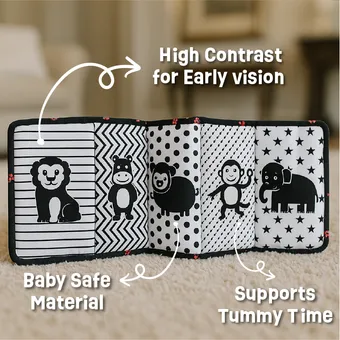
    • Visual: Black-and-white high-contrast cards and mirrors.
    • Auditory: Soft, lightweight rattles and musical mobiles.
    • Goal: Focus, tracking, and early auditory recognition.

    3–6 Months: Grabbing and Mouthing

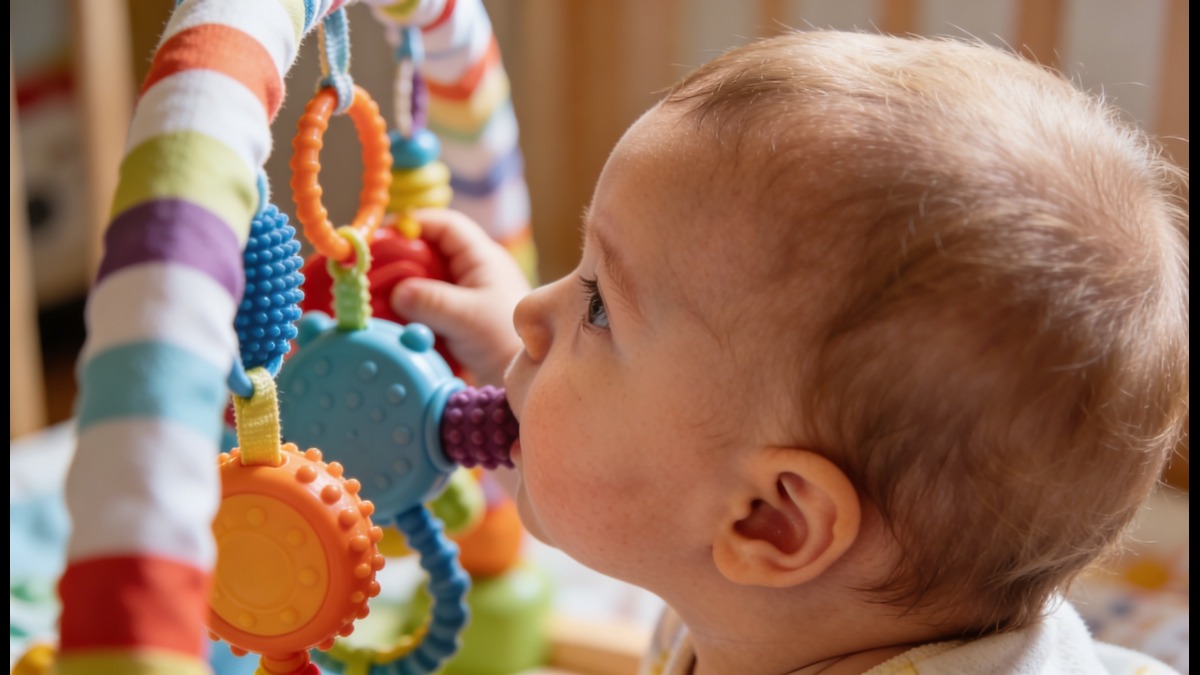
    As babies gain hand control, they begin to explore with their mouths.

    • Tactile: Multi-textured teething rings and ‘crinkle’ books.
    • Proprioception: Play mats with dangling toys that encourage reaching and pulling.
    • Goal: Hand-eye coordination and oral exploration.

    6–12 Months: Cause and Effect

    Older infants begin to understand that their actions have results.

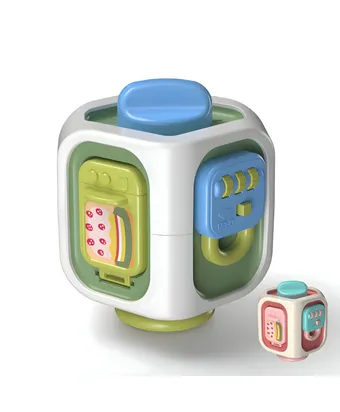
    • Cognitive: Busy boxes with buttons, ‘pop-up’ toys, and stacking cups.
    • Gross Motor: Textured sensory balls that roll away, encouraging crawling.
    • Goal: Problem-solving and spatial awareness.

    Safety Checklist for Sensory Toys

    Since sensory toys often involve diverse materials, safety is the top priority:

    1. Non-Toxic Materials: Ensure all plastics are BPA-free and paints are lead-free (especially for teething toys).
    2. Size Matters: Use the “toilet paper roll” test; if a toy can fit inside the roll, it is a choking hazard.
    3. Durability: Check that small parts like squeakers or “beans” inside plush toys are securely sewn in.

    Frequently Asked Questions

    At what age should sensory play begin?

    Sensory play can begin from birth. For newborns, this includes skin-to-skin contact, singing, and showing high-contrast images. As they grow, more physical toys like rattles and textured balls can be introduced.

    How do sensory toys help with teething?

    Many sensory toys feature varied textures like nubs, ridges, and soft silicone. These provide counter-pressure to sore gums, which distracts the brain from pain while also helping the baby “map” the inside of their mouth.

    Why does a baby put sensory toys in their mouth?

    This is called mouthing. The mouth has more nerve endings than the fingers, making it a baby’s most effective tool for “feeling” whether an object is hard, soft, cold, or textured. It is a vital part of cognitive development.

    What are the best types of sensory toys for newborns?

    For newborns, sensory engagement focuses on high-contrast visual stimuli and gentle auditory input. Black-and-white art cards, unbreakable floor mirrors, and soft-fleece rattles are ideal choices, as they cater to a newborn’s developing eyesight and sensitive hearing without causing overstimulation. 

  • Newborn Sleep Schedule: A Practical Guide to the First 3 Months

    Newborn Sleep Schedule: A Practical Guide to the First 3 Months

    Bringing a newborn home is a whirlwind of joy, laundry, and most notably exhaustion. If you feel like your life currently revolves around a tiny human who thinks 2:00 AM is the perfect time for a party, you aren’t alone.

    In the first 12 weeks, ‘schedule’ is a loose term. However, understanding the science of infant sleep can help you find a rhythm amidst the chaos. This guide breaks down all you need to know about newborn sleep schedule what is biologically normal and how to set the foundation for healthy sleep habits.

    The Reality of Newborn Sleep Patterns

    Newborns typically sleep between 14 and 17 hours within a 24-hour period. However, this sleep is rarely consolidated into long blocks.

    • Frequent Waking: Most infants wake every 2 to 3 hours to feed.
    • Stomach Capacity: At birth, a baby’s stomach is roughly the size of a marble, meaning they require frequent caloric intake to support rapid growth.
    • Sleep Cycles: Unlike adults, newborns spend about 50% of their sleep in REM (active) sleep, which leads to more frequent stirring.

    Why Newborns Lack a Circadian Rhythm

    A schedule is difficult to maintain in the early weeks because newborns are not born with a functioning circadian rhythm (the internal biological clock).

    • Melatonin Production: Infants do not produce their own melatonin, the hormone responsible for sleep regulation until they are 8 to 12 weeks old.
    • Biological Drivers: Until the internal clock matures, sleep is driven entirely by physical needs, specifically hunger, digestion, and exhaustion.
    • Day-Night Confusion: Because the internal clock is absent, many babies experience day-night confusion, where they sleep soundly during the day and become alert during late-night hours.

    Month-by-Month Sleep Breakdown

    Month 1: The Adjustment Phase

    During the first four weeks, the infant is in the “fourth trimester.” Sleep is disorganized and occurs in short bursts around the clock.

    • Total Sleep: 16–18 hours.
    • Wake Windows: 35–60 minutes.
    • Key Challenge: Day-Night Confusion. Many newborns sleep deeply during the bright hours and become highly active at night.
    • The Strategy: Focus on feeding and safe sleep. Keep daytime environments bright and filled with natural household noise, while keeping nighttime dark, quiet, and boring.

    Month 2: Finding a Rhythm

    By week six, many infants begin to show slightly longer stretches of sleep at night, occasionally reaching 3–4 hours at a time.

    • Total Sleep: 14–16 hours.
    • Wake Windows: 60–90 minutes.
    • Key Development: Increased alertness and the appearance of social smiles.
    • The Strategy: Start a simple bedtime routine. A consistent sequence like a bath, pajamas, and a feeding signals to the brain that the long sleep stretch is approaching.

    Month 3: The Turning Point

    At 12 weeks, melatonin production increases. Many babies begin to consolidate sleep into one long stretch at night anywhere from 5 to 7 hours.

    • Total Sleep: 14–15 hours.
    • Wake Windows: 75–120 minutes.
    • Key Development: The 4-month sleep regression may begin early as sleep cycles transition to a more permanent structure.
    • The Strategy: Practice “Drowsy but Awake.” Placing the baby down while calm but not yet fully asleep encourages the early development of self-soothing.

    Understanding Wake Windows

    A wake window is the duration an infant is awake between naps. Missing this window leads to “overtiredness,” which triggers a cortisol spike. This makes it significantly harder for the baby to fall and stay asleep.

    Typical Wake Windows:

    • 0–4 Weeks: 35–60 minutes
    • 4–8 Weeks: 60–90 minutes
    • 8–12 Weeks: 90–120 minutes

    How to Tell if Baby is Tired: Common Sleep Cues

    Don’t wait for your baby to cry to put them down. Crying is a late sign of hunger or tiredness. Look for these early cues:

    • Level 1 (Early): Staring into space, turning away from lights/sounds.
    • Level 2 (Mid): Pulling at ears, rubbing eyes, or yawning.
    • Level 3 (Late): Arching their back, clenching fists, or hysterical crying.

    Important Safety and Strategy Tips
    To ensure your baby sleeps safely and effectively, keep these competitor-proven strategies in mind:

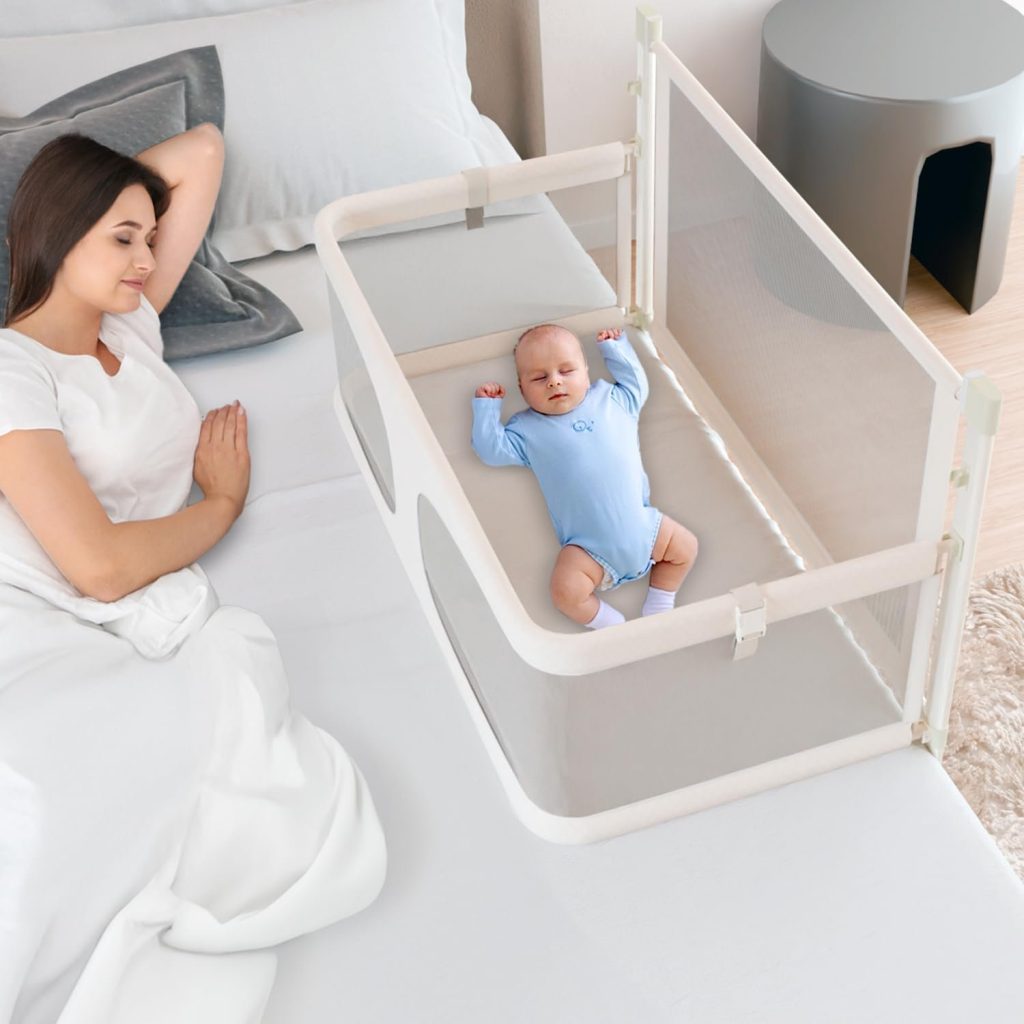
    1. Follow the ABCs of Safe Sleep: Alone, on their Back, in a Crib or bassinet.
    2. Cap Daytime Naps: Most experts recommend not letting a single daytime nap exceed 2 hours. This ensures they get enough calories during the day to sleep longer at night.
    3. The ‘Le Pause’ Method: When your baby whimpers in their sleep, wait 30 seconds before picking them up. Newborns are noisy sleepers and often go through “active sleep” where they move and grunt without actually being awake.
    4. Swaddling: This mimics the womb and prevents the Moro reflex (startle reflex) from waking them up. Note: Stop swaddling as soon as the baby shows signs of rolling.

    Frequently Asked Questions

    When is it appropriate to start sleep training?
    Most pediatricians recommend waiting until the infant is between 4 and 6 months old. Before this age, babies lack the developmental maturity to self-soothe and typically require nighttime feedings for proper growth.

    Why is there so much movement and grunting during newborn sleep?
    This is known as Active Sleep. Newborns spend roughly 50% of their sleep time in REM (Rapid Eye Movement) sleep. It is common for them to twitch, smile, or cry out briefly while remaining technically asleep.

    How is day-night confusion corrected?
    Exposing the infant to natural sunlight for 15 minutes each morning helps set the internal clock. Maintaining a ‘business-only’ approach to nighttime feedings using dim lights and minimal interaction further reinforces that night is for resting.

    How many naps does a 3-month-old typically need?
    At three months, most infants take between 3 and 5 naps per day. The frequency depends on the length of each nap, with the goal of keeping total daytime sleep around 4 to 5 hours.

  • Baby Swaddling in Summer:Dos, Don’ts & Safety Tips

    Baby Swaddling in Summer:Dos, Don’ts & Safety Tips

    Swadding, often recommended as one of the best ways to calm a newborn and improve their sleep quality, but when summer arrives, many parents start to question it. Is baby swaddling in summer safe for babies, or can it lead to overheating?

    And the concern is completely valid. Newborns are more sensitive to temperature changes and cannot regulate heat as effectively as adults. In warmer weather, the risk of overheating makes many parents unsure about whether they should continue swaddling their baby.

    The good news is that swaddling can still be safe during warmer months, as long as it is done correctly. Understanding when to swaddle, what materials to use and how to avoid overheating makes all the difference.

    This blog answers all the questions around swaddling. Is it safe in summer, the benefits, risks and practical tips. Keep reading to know all about it. But before we begin finding out if it’s good for summer or not. Let’s understand what swaddling actually is. 

    H2: What is Swaddling and Why You Should Do it? 

    Swaddling is the practice of wrapping a newborn snugly in a soft cloth or blanket to recreate the secure feeling of the womb. For babies who are adjusting to a completely new environment, this sense of comfort can make a significant difference in their sleep and overall mood.

    Newborns are born with a natural startle reflex (also known as the Moro reflex), which can wake them up suddenly. Swaddling helps reduce these involuntary movements, allowing babies to sleep more peacefully and for longer durations.

    Apart from improving sleep, swaddling also:

    • Provides a sense of safety and comfort
    • Reduces fussiness and crying
    • Helps babies settle faster
    • Supports better sleep routines for parents

    For new parents navigating the early days, swaddling can be one of the simplest yet most effective techniques to soothe a newborn.

    H2: Different Types of Swaddling 

    There isn’t just one way to swaddle a baby. Depending on your baby’s comfort and the weather, you can choose from different styles:

    1. Traditional Swaddle
    This involves wrapping your baby snugly with a cloth blanket, securing the arms while allowing slight leg movement. It’s the most common method.

    2. Arms-Up Swaddle
    Some babies prefer having their hands near their face. This style allows natural movement while still offering comfort.

    3. Sleep Sacks or Swaddle Bags
    These are wearable blankets designed for convenience. They are especially useful for parents who want an easy and consistent swaddling method.

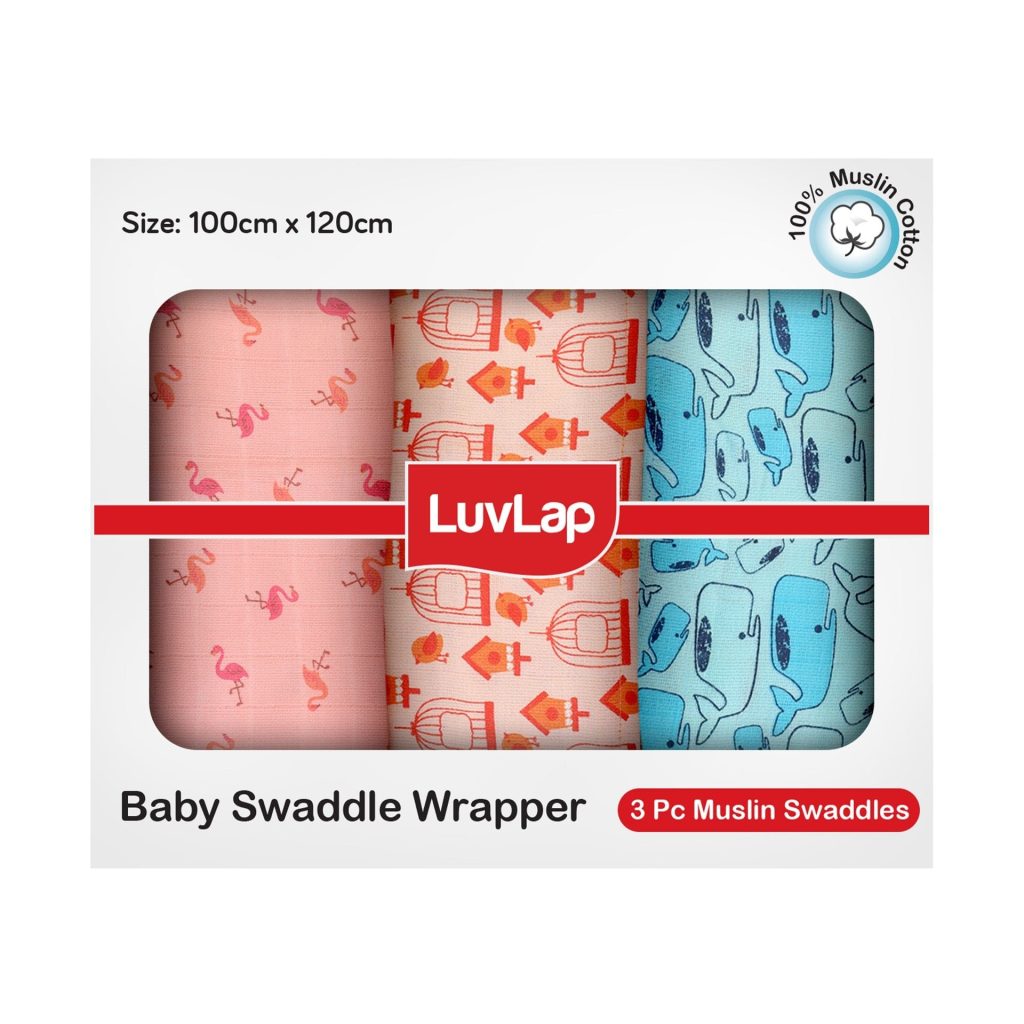
    4. Lightweight Muslin Swaddle
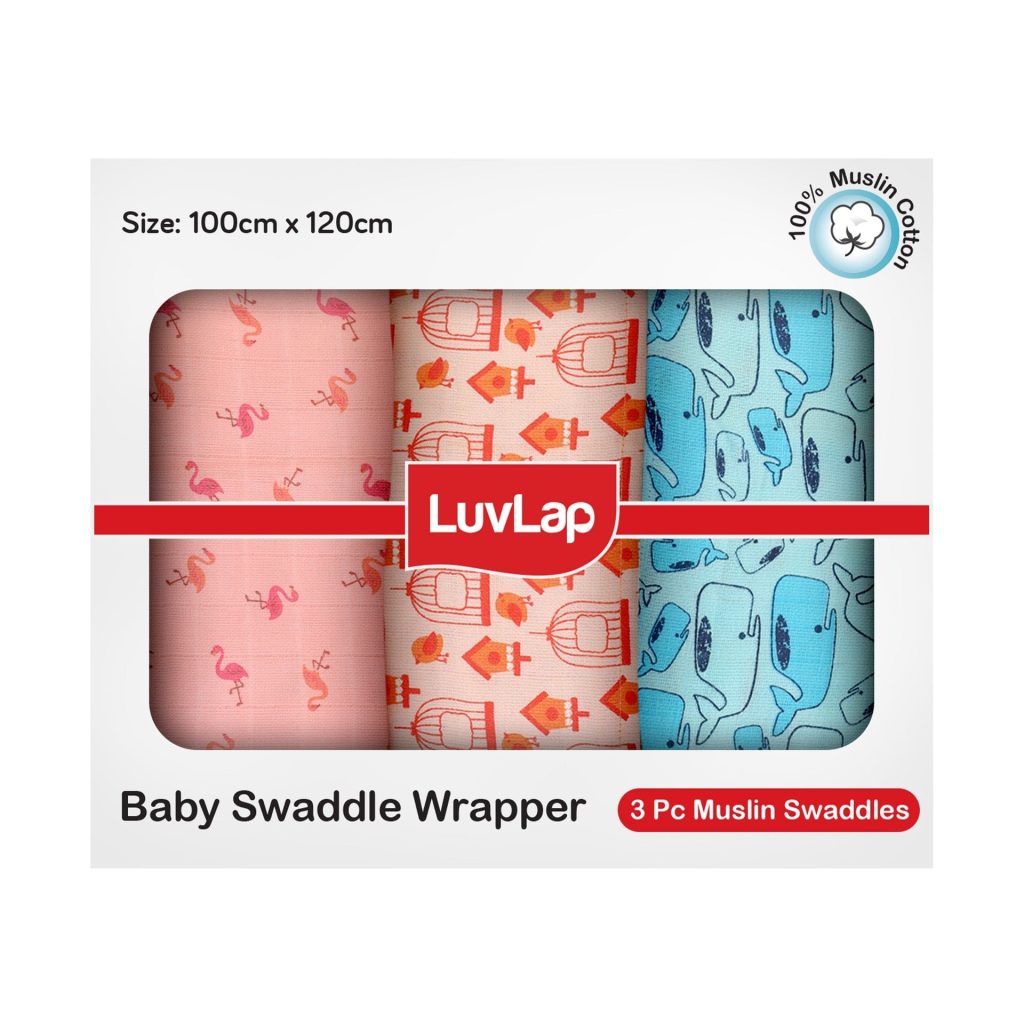
    Perfect for warmer weather, muslin swaddles are breathable and reduce the risk of overheating.

    Choosing the right type depends on your baby’s preference and the surrounding temperature, especially important during summer.

    H2: Is Swaddling Safe in Summer?

    Swaddling in summer is safe,  but only when done carefully. The biggest concern during hot weather is overheating. Babies cannot regulate their body temperature as effectively as adults, which makes them more vulnerable to heat.

    However, swaddling doesn’t need to be avoided entirely in summer. With the right approach such as using breathable fabrics, dressing your baby lightly, and maintaining a comfortable room temperature it can still be a safe and soothing practice.

    The key is balance; comfort without trapping heat.

    H2: Benefits of Swaddling in Summer 

    1. Promotes Better Sleep: Swaddling mimics the snug feeling of the womb, helping babies sleep more soundly even in warmer months when minor discomforts can disrupt rest.

    2. Reduces the Startle Reflex: Babies have a natural Moro (startle) reflex that can wake them suddenly. Swaddling suppresses this, allowing longer, uninterrupted sleep regardless of the season.

    3. Soothes Fussiness & Colic: The gentle pressure of a swaddle can calm an overstimulated or colicky baby, which is especially helpful in summer when heat and new environments may increase irritability.

    4. Regulating Comfort: (Not Just Temperature) Using a lightweight, breathable fabric like muslin or bamboo allows swaddling in summer without overheating, while still providing the emotional security and comfort babies need.

    5. Supports Safe Sleep: Positioning Swaddling keeps a baby’s arms tucked safely, reducing the chance of rolling or repositioning during sleep — an important safety benefit that applies year-round.

    Summer Tip: Always use thin, breathable fabrics, keep the room at 24–26°C, and ensure the baby’s head remains uncovered to prevent overheating.

    H2: How to Swaddle a Baby in Summer (Step-by-Step)

    Learning how to swaddle a newborn correctly is especially important during summer to avoid overheating. Follow these simple steps:

    Step 1: Choose the Right Fabric:  Use a lightweight, breathable cloth like cotton or muslin.

    Step 2: Lay the Swaddle Flat: Spread the cloth in a diamond shape and fold the top corner down slightly.

    Step 3: Position Your Baby: Place your baby on their back with shoulders just below the folded edge.

    Step 4: Wrap One Side: Gently bring one side of the cloth across your baby’s body and tuck it under.

    Step 5: Fold the Bottom Loosely: Bring the bottom up but ensure there is enough room for leg movement.

    Step 6: Wrap the Other Side: Wrap the remaining side across and tuck it securely.

    Important Tip: Keep the swaddle snug around the arms but loose around the hips to allow natural movement and airflow.

    H2: Do’s & Don’ts for Swaddling in Summer 

    Do’s

    1. Use Lightweight, Breathable Fabric Opt for muslin, cotton, or bamboo wraps that allow airflow and prevent heat build-up around the baby.

    2. Keep the Room Cool Maintain room temperature between 24–26°C and use a fan or air conditioning to ensure a comfortable sleep environment.

    3. Dress Baby Minimally Underneath A light onesie or just a diaper under the swaddle is enough. Avoid layering heavy clothing beneath the wrap.

    4. Check for Overheating Regularly Feel the baby’s neck or chest (not hands/feet) to gauge body temperature. Warm, sweaty skin or flushed cheeks are warning signs.

    5. Swaddle Snugly but Not Too Tight Wrap firmly enough to feel secure, but ensure there’s room for the hips and legs to move freely to prevent hip dysplasia.

    6. Always Place Baby on Their Back: Swaddled babies should always be laid on their back to reduce the risk of SIDS.

    Don’ts

    1. Don’t Use Thick or Fleece Blankets Heavy fabrics trap heat and significantly raise the risk of overheating in summer.

    2. Don’t Cover the Baby’s Head The head is a key area for heat release — always keep it uncovered while swaddling.

    3. Don’t Swaddle Once Baby Can Roll Over As soon as a baby shows signs of rolling (usually around 2–3 months), swaddling becomes a safety risk.

    4. Don’t Swaddle Too Loosely A loose swaddle can unravel and become a suffocation hazard during sleep.

    5. Don’t Ignore Signs of Discomfort Excessive crying, rapid breathing, or a very red face may signal the baby is too hot unwrap immediately and cool them down.

    6. Don’t Swaddle for Extended Periods During the Day Give the baby regular breaks from swaddling during daytime to allow free movement and natural development.

    H2: Tips to Swaddle Your Baby in Summer 

    To make swaddling safer and more comfortable during warmer months, keep these practical tips in mind:

    1. Choose the Right Time to Swaddle
    Swaddle your baby mainly during sleep rather than throughout the day.

    2. Use Minimal Layers
    If the weather is very hot, you can skip inner clothing and use just a light swaddle.

    3. Keep the Sleeping Area Cool
    Ensure proper ventilation and avoid direct sunlight in the baby’s room.

    4. Watch for Baby’s Signals
    Every baby is different if your baby seems uncomfortable, adjust accordingly.

    5. Consider Alternatives When Needed
    If temperatures are extremely high, opt for lightweight sleep sacks or breathable babywear instead of traditional swaddling.

    6. Stay Flexible
    Swaddling isn’t mandatory. If your baby sleeps comfortably without it during summer, that’s completely fine.

    Frequently Asked Questions

    1. How to swaddle babies in summer?

    Use a single layer of lightweight muslin fabric and keep the legs loose. Always ensure the neck and face are uncovered and check the back of the neck for overheating.

    1. Which fabric is best for swaddling in summer?

    Muslin cotton is the best choice, breathable, lightweight, and gentle on baby’s skin. Bamboo fabric is a good alternative for babies with sensitive skin. 

    1. When should I stop swaddling my baby?

    Stop swaddling as soon as your baby shows signs of rolling over, typically between 2 and 4 months. Continuing after this point is a safety risk.

    1. Can I use a fan or air conditioner in my baby’s room?

    Yes, both are safe as long as the airflow is not directed at your baby. Keep the room temperature between 24–26°C and dress your baby in a single light layer.

    1. What are some easy swaddling techniques for summer?

    The diamond swaddle and arms-out swaddle are the easiest for summer,  both use minimal fabric and keep your baby cool. The arms-out technique works especially well once your baby starts rolling.

  • Separation Anxiety in Babies & Toddlers: All You Need to Know 

    Separation Anxiety in Babies & Toddlers: All You Need to Know 

    If your baby cries the moment you leave the room or your toddler clings tightly when you try to step away, you’re not alone. Separation anxiety is a completely normal part of your child’s development. While it can feel overwhelming for both parents and children, it actually reflects a strong emotional bond.

    The good news? With the right understanding and approach, you can help your child feel secure and confident even when you’re not around.

    What is Separation Anxiety in Babies?

    Separation anxiety is when a baby or toddler becomes upset when separated from their primary caregiver, usually a parent. It’s a natural developmental phase that shows your child has formed a strong attachment.

    As babies grow, they begin to understand that people exist even when they’re not visible (a concept called object permanence). This realization can make them anxious when you’re not around because they don’t yet understand that you will return.

    Signs to Look For

    Separation anxiety can show up in different ways depending on your child’s age and temperament. Here are some common signs:

    • Crying or fussing when you leave the room
    • Clinging to you in new or unfamiliar situations
    • Refusing to go to sleep without you nearby
    • Waking up at night and calling for you
    • Fear of strangers or new environments
    • Tantrums during drop-offs (daycare, school, etc.)
    • Wanting constant reassurance

    Not all children show the same intensity. Some may adjust quickly, while others may need more time and support.

    Separation Anxiety by Age

    Understanding how separation anxiety changes with age can help you respond better.

    Newborn to 6 Months: At this stage, babies don’t fully understand separation. They may cry due to discomfort, hunger, or the need for attention, but not specifically because of separation anxiety.

    6 to 12 Months: This is when separation anxiety typically begins.

    • Babies start recognizing familiar faces
    • They may cry when you leave or when a stranger approaches
    • Peak anxiety often occurs around 8–10 months

    1 to 2 Years (Toddlers): Separation anxiety can intensify during toddlerhood.

    • Strong attachment to parents
    • Resistance to being left at daycare or with others
    • Emotional reactions like crying, screaming, or clinging

    2 to 3 Years: Toddlers begin to understand routines better but may still struggle.

    • They may express fear verbally
    • Anxiety may come and go depending on situations
    • Transitions (like starting preschool) can trigger it

    3+ Years: Most children start outgrowing separation anxiety.

    • Improved understanding of time and return
    • Better emotional regulation
    • Still may need reassurance in new environments

    Why Does Separation Anxiety Happen?

    Separation anxiety isn’t a problem, it’s a sign of healthy emotional development. Some common reasons include:

    • Strong attachment to caregivers
    • Fear of unfamiliar environments
    • Changes in routine (new home, daycare, travel)
    • Tiredness or hunger
    • Developmental milestones

    How to Ease Your Child’s Separation Anxiety

    • Start with short separations: Begin with short periods apart and slowly increase the time. This helps your child understand that separation is temporary and that you will always return.
    • Create a simple goodbye routine: Keep farewells consistent with a hug, smile, and a reassuring phrase. A predictable routine makes separation feel safer and less stressful.
    • Avoid sneaking away: Always say goodbye before leaving. Sneaking away can make your child feel insecure and increase anxiety over time.
    • Offer comfort objects: A favorite toy or blanket can help your child feel secure in your absence. Familiar items provide comfort and reduce stress.
    • Maintain a consistent routine: Regular schedules help children feel safe and know what to expect. This reduces uncertainty and makes separations easier.
    • Stay calm and reassuring: Children pick up on your emotions, so staying calm helps them feel secure. Your confidence reassures them that everything is okay.
    • Acknowledge their feelings: Let your child know it’s okay to feel upset. Validating their emotions helps them feel understood and supported.
    • Encourage independence slowly: Allow your child to play independently for short periods. This builds confidence and helps them get comfortable being on their own.

    When Should You Be Concerned?

    Separation anxiety is a normal part of your child’s development and usually improves with time. However, in some cases, it may need extra attention if it starts affecting your child’s daily routine or well-being. Here are some of the signs you should look out for: 

    • Extreme distress that doesn’t improve over time
      If your child continues to show intense reactions even after consistent efforts and routines, it may need closer attention.
    • Refusal to eat, sleep, or engage
      When anxiety begins to affect basic activities like eating, sleeping, or playing, it’s a sign that your child may be struggling more than usual.
    • Anxiety affecting daily life significantly
      If your child avoids daycare, social interactions, or normal routines due to fear of separation, it could be beyond a typical phase.
    • Older children showing intense fear of separation
      While separation anxiety is common in younger children, persistent or extreme fear in older kids may require guidance.

    Separation anxiety can be challenging, but it’s a natural and temporary phase in your child’s growth. With patience, consistency, and reassurance, your child will gradually learn to feel safe and secure even when you’re not around.

    Remember, every child is different. Some may adjust quickly, while others take more time. What matters most is creating a supportive environment where your child feels understood and loved.

    Frequently Asked Questions

    1. How long does separation anxiety last?

    It usually starts around 6–8 months and can last until 2–3 years, with peaks and phases in between.

    2. Is separation anxiety a bad sign?

    Not at all. It actually shows your child has formed a strong emotional bond with you.

    3. Should I ignore my child when they cry?

    No. Comfort and reassure them, but also help them gradually adjust to short separations.

    4. Can separation anxiety affect sleep?

    Yes. Babies and toddlers may wake up at night and seek comfort when they feel your absence.

    5. Does daycare make separation anxiety worse?

    Initially, yes. But over time, children adapt and become more confident in new environments.

    6. Can I prevent separation anxiety?

    You can’t completely prevent it, but you can reduce its intensity by building routines and practicing short separations early.

  • STEM Toys Explained: Why They Matter & How to Pick the Right Ones 

    STEM Toys Explained: Why They Matter & How to Pick the Right Ones 

    Walk into any toy store today and you’ll find shelves lined with ‘STEM’ labels. But beyond the buzzword, parents and educators are genuinely asking: what makes a toy a STEM toy? Are they worth it? And with hundreds of options, how do you even begin to choose? This guide answers all of that clearly, honestly, and with your child’s development front and center.

    What Are STEM Toys?

    STEM stands for Science, Technology, Engineering, and Mathematics. STEM toys are hands-on educational tools designed to introduce children to the core principles of these disciplines not through a textbook, but through play, building, experimenting, and problem-solving.

    Unlike passive entertainment toys, STEM toys invite children to do something: build a structure, test a hypothesis, debug a sequence, solve a puzzle. Think building block sets, magnetic tiles, coding robots, circuit kits, and science experiment boxes. The best STEM toys isolate one or two foundational ideas; cause-and-effect, patterning, spatial reasoning, and let children explore them organically, at their own pace.

    You may also encounter the term STEAM toys, which adds ‘Arts’ to the mix, encouraging creative expression alongside analytical thinking. Both categories serve the same core purpose: making learning feel like discovery.

    Why STEM Toys Matter for Early Childhood Development

    The case for introducing STEM concepts early is backed by strong developmental research. Most brain connections form between ages 0 and 5, making early childhood a critical window for planting the seeds of curiosity, logic, and resilience.

    1. They Build Critical Thinking and Problem-Solving Skills

    When a toddler tries to stack magnetic blocks and watches the tower topple, they’re running a physics experiment. When a preschooler figures out why a gear won’t turn, they’re debugging. STEM toys consistently challenge children to test ideas, observe outcomes, and try again building the kind of flexible, logical thinking that benefits them in every subject and life situation.

    Research from the American University’s STEM Education Report found that children exposed to STEM concepts early score significantly higher in logical reasoning assessments than those who aren’t exposed until school age. Similarly, hands-on learning has been shown to help children retain up to 50% more information compared to passive methods like watching videos or listening to lectures.

    2. They Develop Fine Motor Skills and Spatial Reasoning

    Manipulating small gears, threading beads, connecting circuit pieces, assembling a robot, all of these require hand-eye coordination and dexterous finger movements. These aren’t just ‘toy’ skills; they translate directly into writing, drawing, and the precision tasks children encounter throughout their education.

    Spatial reasoning, the ability to visualize and mentally manipulate objects is one of the strongest early predictors of success in math and science. STEM toys that involve building, rotation, and construction actively train this skill.

    3. They Foster Resilience and a Growth Mindset

    Failure is built into STEM play. A bridge collapses. A robot goes the wrong way. A circuit doesn’t light up. Rather than experiencing these as defeats, children who play regularly with STEM toys learn to treat failure as feedback. This ‘try, fail, adjust, try again’ cycle is one of the most valuable habits a child can develop not just academically, but emotionally.

    A peer-reviewed study published in ScienceDirect (2025) confirmed that STEM toys used in early childhood classrooms produce measurable positive impacts on cognitive abilities including problem-solving and critical thinking, as well as socio-emotional skills like verbal communication.

    4. They Prepare Children for a Future Shaped by Technology

    Industries across the globe are rapidly evolving around robotics, AI, automation, and data. Introducing children to the foundations of these fields through play before the pressure of formal education builds comfort, confidence, and genuine curiosity. Many educators and child development experts emphasize that children introduced to STEM early are better positioned for future academic and career success.

    5. They Promote Creativity and Open-Ended Thinking

    Contrary to the assumption that STEM is purely analytical, the best STEM toys are deeply creative. There’s rarely one right answer. Open-ended toys like LEGO sets, magnetic tiles, and engineering kits invite children to imagine, invent, and iterate. This intersection of creativity and logic is exactly the kind of thinking that drives innovation.

    STEM Toys by Age: A Developmental Roadmap

    One of the most common mistakes parents can make is choosing a STEM toy that’s too advanced, leaving the child frustrated or too simple, offering no challenge. Here is a clear age appropriate guide to help you choose the right toys. 

    Ages 0–2: Sensory Exploration and Cause-and-Effect

    At this stage, any toy that responds to a child’s action is a STEM toy in spirit. Think rattles, soft stackers, activity mats with textures and sounds, and shape sorters. The goal is to build an intuitive understanding that actions produce outcomes, the very foundation of scientific thinking.

    Recommended toy types: Sensory balls, stacking rings, simple shape sorters, cause-and-effect activity gyms.

    Ages 2–4: Sorting, Matching, and Building

    Toddlers and young preschoolers thrive with toys that involve sorting by color or size, simple pattern matching, and basic building. Magnetic tiles and oversized building blocks are ideal here; they’re safe, open-ended, and endlessly reconfigurable.

    Recommended toy types: Magnetic building blocks, counting bears, large LEGO DUPLO sets, gear and motion playsets, simple puzzle boards.

    Ages 4–6: Early Engineering and Pre-Coding

    Children at this stage are ready to follow multi-step sequences, which is the precursor to coding logic. Toys that involve building ‘machines’ or directing a character through a maze are perfect. Screen-free coding toys like Cubetto (a wooden robot programmed with physical blocks) are excellent for this age.

    Recommended toy types: Simple circuit kits, beginner robot kits, science experiment sets, magnetic marble runs, pattern-block sets.

    Ages 6-9: Coding, Electronics, and Real Engineering

    School-age kids can handle real problem-solving with a clear beginning, middle, and end. Snap Circuits, beginner robotics kits, and more complex building sets open up a world of genuine engineering. This is also when interest-based selection matters most, if your child loves space, get a solar system model kit; if they love animals, a nature science explorer kit.

    Recommended toy types: Snap Circuits, robotics starter kits, chemistry sets, math puzzle games, magnetic engineering sets.

    Ages 9+: Advanced Robotics, Coding, and Real-World Science

    Older children are ready for programming toys that use real coding languages, multi-part robotics kits (like LEGO Mindstorms or Arduino-based projects), and science experiments with measurable outcomes.

    Recommended toy types: LEGO Mindstorms, Raspberry Pi starter kits, advanced chemistry sets, microscope kits, 3D printing pens.

    How to Choose the Right STEM Toy: 7 Key Factors

    With thousands of options available, here’s a practical decision-making framework for parents:

    1. Match the Toy to the Child’s Developmental Stage, Not Just Their Age

    Age ranges on packaging are a starting guide, not a rule. Observe your child’s current abilities and choose a toy that challenges them slightly above where they are, enough to be engaging, not enough to be overwhelming. Child development experts call this the ‘zone of proximal development’.

    2. Prioritize Open-Ended Play Over Single-Outcome Toys

    The most valuable STEM toys have no single correct answer. A toy that can be used 50 different ways develops deeper thinking than one with a fixed solution. Building sets, magnetic tiles, and science exploration kits consistently outperform single-task toys in long-term developmental impact.

    3. Follow Your Child’s Interests

    A child who loves dinosaurs will engage far more deeply with a paleontology dig kit than with a generic circuit board. Passion is the best motivator. Interest-aligned STEM toys drive the sustained engagement needed for real learning.

    4. Look for Safety Certifications

    For younger children especially, check for: non-toxic materials, no small parts for kids under 3, and certifications such as CE, ASTM F963 (US toy safety standard), EN71 (European standard), and RoHS compliance for electronics. These certifications ensure the toy meets rigorous safety benchmarks.

    5. Assess Screen-Free vs. Digital Balance

    Both types have a place. Screen-free STEM toys, magnetic tiles, building kits, science sets tend to develop superior fine motor skills, spatial reasoning, and sustained attention. Digital STEM toys and coding platforms offer exposure to real-world tech skills. A healthy mix of both gives children the broadest developmental foundation.

    6. Choose Toys That Grow with the Child

    The best STEM toys offer scalable complexity. A child who starts with simple block stacking should be able to return to the same toy two years later and find a new challenge. Look for modular systems and expandable kits that evolve alongside your child’s growing abilities.

    7. Consider Durability and Value

    A well-made STEM toy withstands years of use and can often be passed between siblings. Prioritize solid construction over flashy packaging, and look for brands with strong parent and educator reviews.

    STEM Toys to Avoid

    Not every toy wearing the ‘STEM’ label earns it. Watch out for:

    • Toys that are highly prescriptive: Step-by-step instructions with only one possible outcome stifle creativity and limit learning.
    • Over-reliance on passive screen time: Apps that entertain more than they challenge don’t deliver STEM benefits.
    • Vague ‘educational’ claims: With no clear explanation of what skill the toy actually develops.
    • Toys pitched far above the child’s level: frustration kills curiosity faster than anything.

    The Role of Parents in STEM Play

    A STEM toy placed in a room isn’t the same as STEM play with a parent nearby. Research consistently shows that parental involvement significantly deepens a child’s engagement and comprehension. You don’t need to be an engineer you just need to ask the right questions:

    • What do you think will happen if you add one more block?
    • Why do you think the bridge fell? What could we do differently?
    • What would happen if we changed this piece?

    These open-ended prompts model scientific thinking and turn playtime into a genuine dialogue about the world.

    STEM toys for early learning are not a trend, they’re a response to a genuine developmental need. Children are natural scientists, engineers, and problem-solvers. The right STEM toy doesn’t create these qualities; it reveals them, gives them room to grow, and builds the confidence a child needs to keep exploring. The foundation you help build during these early years of asking questions, testing ideas, and persisting through challenges is the most important curriculum they’ll ever experience.

    Frequently Asked Questions

    At what age should I start giving my child STEM toys?
    You can introduce age-appropriate STEM concepts from as early as 6 months through sensory play. Formal STEM toys, building sets, shape sorters, simple circuit toys are appropriate from around 18 months onward.

    Are STEM toys only for kids who are ‘good at math’?
    Not at all. STEM toys are about curiosity and process, not performance. They’re especially valuable for children who struggle with traditional classroom learning, as hands-on play offers a completely different pathway to understanding.

    Do STEM toys need to be expensive?
    No. A set of wooden blocks, a simple magnet kit, or a nature collection bag can deliver enormous developmental value. Price is not a reliable indicator of educational quality.

    What’s the difference between STEM and STEAM toys? STEAM adds “Arts” to the mix, emphasizing creative expression alongside scientific and mathematical thinking. Both are valuable; STEAM toys simply lean more explicitly into design and aesthetics.