Category: Growing Kids

From first grade to tweens, a lot happens in these years. Get expert insights on academics, health, nutrition, and raising confident, happy kids.

  • Gentle Parenting vs. Permissive Parenting: Why Boundaries Matter

    Gentle Parenting vs. Permissive Parenting: Why Boundaries Matter

    As new parents, we all want to raise happy, well-adjusted children. We often hear terms like “gentle parenting” and “positive discipline,” which sound wonderful, but sometimes it’s easy to confuse them with a hands-off approach. You might wonder if being too “gentle” means letting your child do whatever they want, leading to a common question: what’s the difference between gentle parenting vs permissive parenting?

    It’s a valid concern. Many parents worry about striking the right balance – being warm and responsive without becoming overly lenient. The truth is, while both approaches prioritize a loving connection, the presence (or absence) of clear boundaries is what truly sets them apart. Here’s how to understand this crucial distinction and empower your child effectively.

    Understanding Gentle Parenting: Connection with Clear Limits

    Gentle parenting is all about building a strong, respectful connection with your child, guiding them with empathy and understanding. It acknowledges that kids are still learning and growing, and often, what looks like “misbehavior” is just them trying to communicate an unmet need or a skill they haven’t quite mastered yet.

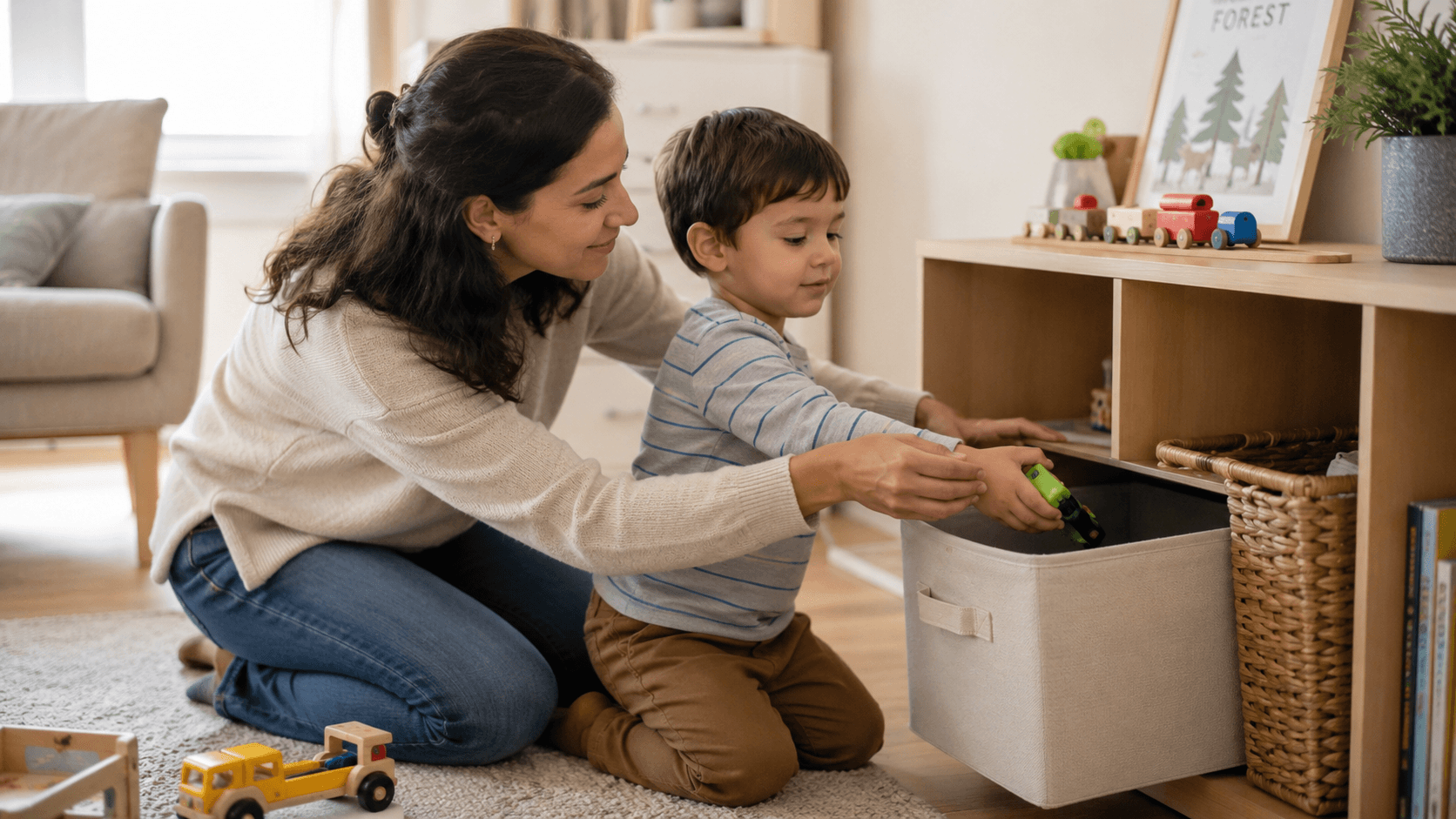
    At its heart, gentle parenting means responding to your child’s feelings and needs. It’s about helping them learn to manage their emotions and figure out how to solve problems. It’s not about avoiding consequences, but making sure those consequences are logical, respectful, and focused on teaching, not just punishing. Think of yourself as your child’s emotional coach, helping them navigate their big feelings and the world around them.

    Key Pillars of Gentle Parenting:

    • Empathy: Acknowledging and validating your child’s feelings, even if you don’t agree with their actions.
    • Respect: Treating your child as an individual with their own thoughts and feelings, and expecting the same respect in return.
    • Understanding: Trying to understand the “why” behind their behavior, rather than just reacting to the behavior itself.
    • Boundaries: Setting clear, consistent, and age-appropriate limits that are communicated kindly but firmly.

    Permissive Parenting: The Absence of Boundaries

    Permissive parenting, on the other hand, often means there aren’t many clear boundaries, rules, or expectations. Parents who lean this way are usually warm and responsive, just like gentle parents. But they tend to avoid confrontation and might give in to their child’s demands to keep the peace or prevent an upset. They might even believe that giving their child total freedom will help them be more creative and independent.

    While the intention is often good – wanting to avoid harsh discipline or just make their child happy – this approach can lead to challenges down the road. Kids raised in permissive environments often struggle with self-regulation, impulse control, and understanding social expectations. They might have a tough time following rules at school or elsewhere because they haven’t learned to respect limits at home.

    The Risks of Permissive Parenting:

    • Difficulty with self-control and emotional regulation.
    • Challenges respecting authority figures and rules.
    • Lower academic performance due to lack of structure.
    • Increased likelihood of engaging in risky behaviors later in life.

    Why Boundaries are Non-Negotiable for Healthy Development

    This is where the difference between gentle parenting vs permissive parenting really stands out. Boundaries aren’t about control; they’re about giving your child a safe, predictable framework where they can truly thrive. Imagine a child learning to walk – they need a stable floor, not a slippery slope. Boundaries are that stable floor.

    When you set clear, consistent boundaries, you’re teaching your child vital life skills. You’re showing them that the world has rules, that their actions have consequences, and that while their needs are important, so are the needs of others. This understanding helps them build emotional intelligence, resilience, and a strong sense of security.

    What Boundaries Teach Your Child:

    • Safety: “We hold hands in the parking lot so you stay safe.”
    • Respect: “We don’t hit our friends because it hurts them.”
    • Self-Regulation: “You can be upset, but we don’t throw toys.”
    • Responsibility: “It’s your job to put your clothes in the hamper.”
    • Structure: “Bedtime is at 8 PM so your body gets enough rest.”

    Setting Boundaries the Gentle Way

    So, how do you set boundaries without yelling or using punishments? It’s a balancing act, but you absolutely can be firm and kind at the same time. Remember, the goal is to teach, not to shame or scare.

    1. Be Clear and Consistent

    Kids do best with predictability. State your boundaries simply and clearly. For example, say, “We eat dinner at the table,” instead of, “Maybe we’ll eat at the table, if you want.” Once you set a boundary, stick to it. Being inconsistent just confuses kids and often leads to more power struggles.

    2. Explain the “Why” (Age-Appropriately)

    Instead of just saying “no,” explain the reason behind the boundary. “We don’t jump on the sofa because you could fall and get hurt.” For older children, you can even involve them in discussing the “why.” This helps them understand the logic and feel more invested in following the rule.

    3. Offer Choices (Within Limits)

    Giving choices empowers children and often reduces resistance. “Do you want to wear the blue shirt or the red shirt?” is better than just, “Are you going to get dressed now?” If it’s bedtime, asking, “Do you want to read one book or two before lights out?” gives them some control within the established limit.

    4. Use Natural and Logical Consequences

    Instead of punishment, focus on consequences that are directly related to the behavior. If your child refuses to put away their toys, a logical consequence might be that you put those toys away for a short time. If they spill milk because they were running, the natural consequence is they help clean it up. Keep consequences short-term and immediate for younger children.

    According to the Indian Academy of Pediatrics (IAP), positive discipline and clear boundaries are essential for fostering a child’s healthy emotional and social development.

    Empathy and Firmness: A Parent’s Nuskha

    Think of it like preparing a delicious dal – you need both the warmth of the spices and the structure of the lentils to make it just right. Similarly, gentle parenting requires both deep empathy and unwavering firmness. There will be days when your child pushes every button, and your patience wears thin. That’s perfectly normal. Take a deep breath, step back if you need to, and then reconnect with your child. “I see you’re upset that you can’t have another gulab jamun, and I understand it’s hard. But we’ve had enough for today.”

    This approach validates their feelings (“I see you’re upset”) while holding the boundary (“but we’ve had enough”). It teaches them that their feelings are okay, even when their desires can’t always be met. This is the heart of gentle discipline – guiding them through their emotions and teaching them how to navigate disappointment and limits respectfully.

    Finding the sweet spot between nurturing your child’s spirit and providing the structure they need doesn’t have to feel overwhelming. It’s a learning process for both you and your little one, and every family finds their unique rhythm. Remember, you’re building a foundation of trust and respect that will last a lifetime.

    As your family grows and changes, having easy access to daily essentials like baby food, diapers, personal care items, and parenting necessities can make routines smoother. Platforms like OZi help busy parents manage everyday needs more conveniently while focusing on what matters most, spending quality time with their little one.

    Frequently Asked Questions

    What is the main difference between gentle parenting and permissive parenting?

    The main difference comes down to boundaries. Gentle parenting combines empathy and connection with clear, consistent boundaries and expectations, which helps children learn self-regulation. Permissive parenting is also warm and loving, but it lacks firm boundaries, often leading to children struggling with self-control and respecting rules.

    Can gentle parenting lead to spoiled children?

    No, not if you practice it correctly. Gentle parenting, when paired with clear and consistent boundaries, actually teaches children respect, empathy, and self-control. Kids often get “spoiled” from a lack of boundaries, not from empathy or connection.

    How do I set boundaries without being harsh?

    Set boundaries clearly and calmly. Explain the “why” in a way your child can understand, offer limited choices, and use natural or logical consequences instead of punishment. The key is to be firm about the boundary but kind and empathetic in how you deliver it.

    Is it ever okay to say “no” as a gentle parent?

    Absolutely! Saying “no” is a crucial part of setting boundaries in gentle parenting. The difference is how you say it – with empathy and a brief explanation, rather than just a harsh, unexplained refusal. For example, “No, we can’t have another biscuit right now; we’ll have dinner soon.”

    What if my child throws a tantrum after I set a boundary?

    Tantrums are a normal part of a child’s development, especially when they hit a limit they don’t like. With gentle parenting, you acknowledge their feelings (“I see you’re really angry right now”) while still holding the boundary. Stay calm, offer comfort, and let them process their emotions without giving in to their demand.

    How can I be consistent with boundaries when I’m exhausted?

    Consistency is tough, especially when you’re tired. Try to pick a few key boundaries that are non-negotiable for your family and focus on those first. Get your partner or other caregivers on board so everyone is on the same page. Remember, even imperfect consistency is better than none at all.
  • STEM Toys Explained: Why They Matter & How to Pick the Right Ones 

    STEM Toys Explained: Why They Matter & How to Pick the Right Ones 

    Walk into any toy store today and you’ll find shelves lined with ‘STEM’ labels. But beyond the buzzword, parents and educators are genuinely asking: what makes a toy a STEM toy? Are they worth it? And with hundreds of options, how do you even begin to choose? This guide answers all of that clearly, honestly, and with your child’s development front and center.

    What Are STEM Toys?

    STEM stands for Science, Technology, Engineering, and Mathematics. STEM toys are hands-on educational tools designed to introduce children to the core principles of these disciplines not through a textbook, but through play, building, experimenting, and problem-solving.

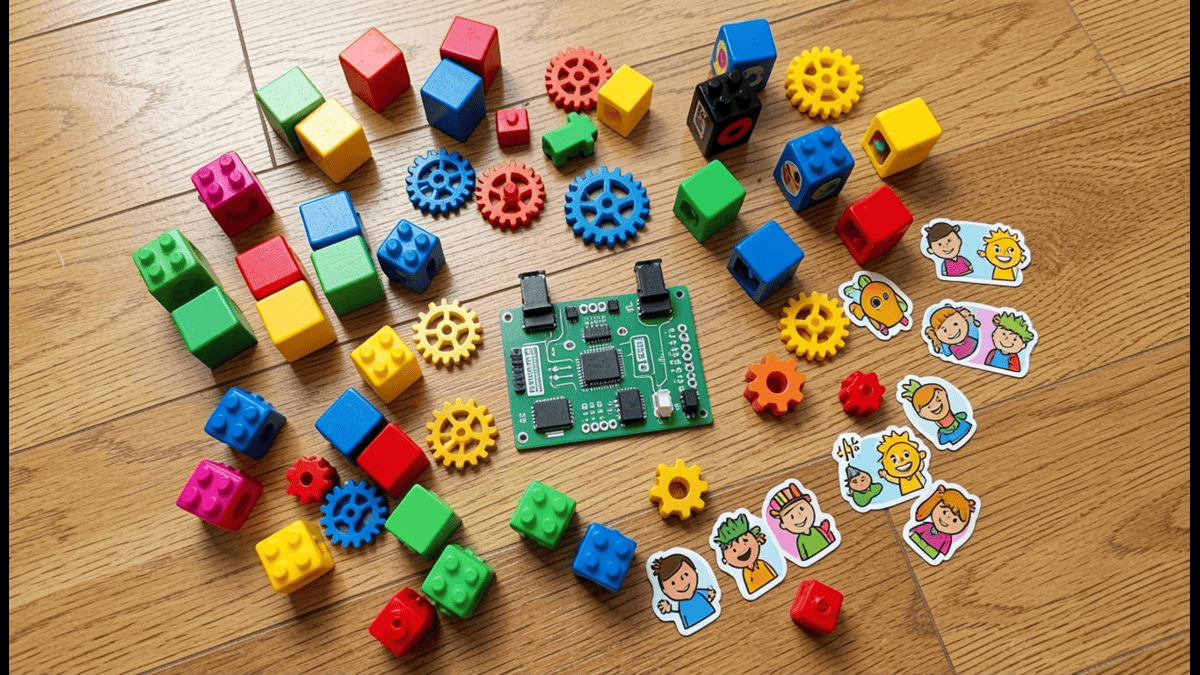
    Unlike passive entertainment toys, STEM toys invite children to do something: build a structure, test a hypothesis, debug a sequence, solve a puzzle. Think building block sets, magnetic tiles, coding robots, circuit kits, and science experiment boxes. The best STEM toys isolate one or two foundational ideas; cause-and-effect, patterning, spatial reasoning, and let children explore them organically, at their own pace.

    You may also encounter the term STEAM toys, which adds ‘Arts’ to the mix, encouraging creative expression alongside analytical thinking. Both categories serve the same core purpose: making learning feel like discovery.

    Why STEM Toys Matter for Early Childhood Development

    The case for introducing STEM concepts early is backed by strong developmental research. Most brain connections form between ages 0 and 5, making early childhood a critical window for planting the seeds of curiosity, logic, and resilience.

    1. They Build Critical Thinking and Problem-Solving Skills

    When a toddler tries to stack magnetic blocks and watches the tower topple, they’re running a physics experiment. When a preschooler figures out why a gear won’t turn, they’re debugging. STEM toys consistently challenge children to test ideas, observe outcomes, and try again building the kind of flexible, logical thinking that benefits them in every subject and life situation.

    Research from the American University’s STEM Education Report found that children exposed to STEM concepts early score significantly higher in logical reasoning assessments than those who aren’t exposed until school age. Similarly, hands-on learning has been shown to help children retain up to 50% more information compared to passive methods like watching videos or listening to lectures.

    2. They Develop Fine Motor Skills and Spatial Reasoning

    Manipulating small gears, threading beads, connecting circuit pieces, assembling a robot, all of these require hand-eye coordination and dexterous finger movements. These aren’t just ‘toy’ skills; they translate directly into writing, drawing, and the precision tasks children encounter throughout their education.

    Spatial reasoning, the ability to visualize and mentally manipulate objects is one of the strongest early predictors of success in math and science. STEM toys that involve building, rotation, and construction actively train this skill.

    3. They Foster Resilience and a Growth Mindset

    Failure is built into STEM play. A bridge collapses. A robot goes the wrong way. A circuit doesn’t light up. Rather than experiencing these as defeats, children who play regularly with STEM toys learn to treat failure as feedback. This ‘try, fail, adjust, try again’ cycle is one of the most valuable habits a child can develop not just academically, but emotionally.

    A peer-reviewed study published in ScienceDirect (2025) confirmed that STEM toys used in early childhood classrooms produce measurable positive impacts on cognitive abilities including problem-solving and critical thinking, as well as socio-emotional skills like verbal communication.

    4. They Prepare Children for a Future Shaped by Technology

    Industries across the globe are rapidly evolving around robotics, AI, automation, and data. Introducing children to the foundations of these fields through play before the pressure of formal education builds comfort, confidence, and genuine curiosity. Many educators and child development experts emphasize that children introduced to STEM early are better positioned for future academic and career success.

    5. They Promote Creativity and Open-Ended Thinking

    Contrary to the assumption that STEM is purely analytical, the best STEM toys are deeply creative. There’s rarely one right answer. Open-ended toys like LEGO sets, magnetic tiles, and engineering kits invite children to imagine, invent, and iterate. This intersection of creativity and logic is exactly the kind of thinking that drives innovation.

    STEM Toys by Age: A Developmental Roadmap

    One of the most common mistakes parents can make is choosing a STEM toy that’s too advanced, leaving the child frustrated or too simple, offering no challenge. Here is a clear age appropriate guide to help you choose the right toys. 

    Ages 0–2: Sensory Exploration and Cause-and-Effect

    At this stage, any toy that responds to a child’s action is a STEM toy in spirit. Think rattles, soft stackers, activity mats with textures and sounds, and shape sorters. The goal is to build an intuitive understanding that actions produce outcomes, the very foundation of scientific thinking.

    Recommended toy types: Sensory balls, stacking rings, simple shape sorters, cause-and-effect activity gyms.

    Ages 2–4: Sorting, Matching, and Building

    Toddlers and young preschoolers thrive with toys that involve sorting by color or size, simple pattern matching, and basic building. Magnetic tiles and oversized building blocks are ideal here; they’re safe, open-ended, and endlessly reconfigurable.

    Recommended toy types: Magnetic building blocks, counting bears, large LEGO DUPLO sets, gear and motion playsets, simple puzzle boards.

    Ages 4–6: Early Engineering and Pre-Coding

    Children at this stage are ready to follow multi-step sequences, which is the precursor to coding logic. Toys that involve building ‘machines’ or directing a character through a maze are perfect. Screen-free coding toys like Cubetto (a wooden robot programmed with physical blocks) are excellent for this age.

    Recommended toy types: Simple circuit kits, beginner robot kits, science experiment sets, magnetic marble runs, pattern-block sets.

    Ages 6-9: Coding, Electronics, and Real Engineering

    School-age kids can handle real problem-solving with a clear beginning, middle, and end. Snap Circuits, beginner robotics kits, and more complex building sets open up a world of genuine engineering. This is also when interest-based selection matters most, if your child loves space, get a solar system model kit; if they love animals, a nature science explorer kit.

    Recommended toy types: Snap Circuits, robotics starter kits, chemistry sets, math puzzle games, magnetic engineering sets.

    Ages 9+: Advanced Robotics, Coding, and Real-World Science

    Older children are ready for programming toys that use real coding languages, multi-part robotics kits (like LEGO Mindstorms or Arduino-based projects), and science experiments with measurable outcomes.

    Recommended toy types: LEGO Mindstorms, Raspberry Pi starter kits, advanced chemistry sets, microscope kits, 3D printing pens.

    How to Choose the Right STEM Toy: 7 Key Factors

    With thousands of options available, here’s a practical decision-making framework for parents:

    1. Match the Toy to the Child’s Developmental Stage, Not Just Their Age

    Age ranges on packaging are a starting guide, not a rule. Observe your child’s current abilities and choose a toy that challenges them slightly above where they are, enough to be engaging, not enough to be overwhelming. Child development experts call this the ‘zone of proximal development’.

    2. Prioritize Open-Ended Play Over Single-Outcome Toys

    The most valuable STEM toys have no single correct answer. A toy that can be used 50 different ways develops deeper thinking than one with a fixed solution. Building sets, magnetic tiles, and science exploration kits consistently outperform single-task toys in long-term developmental impact.

    3. Follow Your Child’s Interests

    A child who loves dinosaurs will engage far more deeply with a paleontology dig kit than with a generic circuit board. Passion is the best motivator. Interest-aligned STEM toys drive the sustained engagement needed for real learning.

    4. Look for Safety Certifications

    For younger children especially, check for: non-toxic materials, no small parts for kids under 3, and certifications such as CE, ASTM F963 (US toy safety standard), EN71 (European standard), and RoHS compliance for electronics. These certifications ensure the toy meets rigorous safety benchmarks.

    5. Assess Screen-Free vs. Digital Balance

    Both types have a place. Screen-free STEM toys, magnetic tiles, building kits, science sets tend to develop superior fine motor skills, spatial reasoning, and sustained attention. Digital STEM toys and coding platforms offer exposure to real-world tech skills. A healthy mix of both gives children the broadest developmental foundation.

    6. Choose Toys That Grow with the Child

    The best STEM toys offer scalable complexity. A child who starts with simple block stacking should be able to return to the same toy two years later and find a new challenge. Look for modular systems and expandable kits that evolve alongside your child’s growing abilities.

    7. Consider Durability and Value

    A well-made STEM toy withstands years of use and can often be passed between siblings. Prioritize solid construction over flashy packaging, and look for brands with strong parent and educator reviews.

    STEM Toys to Avoid

    Not every toy wearing the ‘STEM’ label earns it. Watch out for:

    • Toys that are highly prescriptive: Step-by-step instructions with only one possible outcome stifle creativity and limit learning.
    • Over-reliance on passive screen time: Apps that entertain more than they challenge don’t deliver STEM benefits.
    • Vague ‘educational’ claims: With no clear explanation of what skill the toy actually develops.
    • Toys pitched far above the child’s level: frustration kills curiosity faster than anything.

    The Role of Parents in STEM Play

    A STEM toy placed in a room isn’t the same as STEM play with a parent nearby. Research consistently shows that parental involvement significantly deepens a child’s engagement and comprehension. You don’t need to be an engineer you just need to ask the right questions:

    • What do you think will happen if you add one more block?
    • Why do you think the bridge fell? What could we do differently?
    • What would happen if we changed this piece?

    These open-ended prompts model scientific thinking and turn playtime into a genuine dialogue about the world.

    STEM toys for early learning are not a trend, they’re a response to a genuine developmental need. Children are natural scientists, engineers, and problem-solvers. The right STEM toy doesn’t create these qualities; it reveals them, gives them room to grow, and builds the confidence a child needs to keep exploring. The foundation you help build during these early years of asking questions, testing ideas, and persisting through challenges is the most important curriculum they’ll ever experience.

    Frequently Asked Questions

    At what age should I start giving my child STEM toys?
    You can introduce age-appropriate STEM concepts from as early as 6 months through sensory play. Formal STEM toys, building sets, shape sorters, simple circuit toys are appropriate from around 18 months onward.

    Are STEM toys only for kids who are ‘good at math’?
    Not at all. STEM toys are about curiosity and process, not performance. They’re especially valuable for children who struggle with traditional classroom learning, as hands-on play offers a completely different pathway to understanding.

    Do STEM toys need to be expensive?
    No. A set of wooden blocks, a simple magnet kit, or a nature collection bag can deliver enormous developmental value. Price is not a reliable indicator of educational quality.

    What’s the difference between STEM and STEAM toys? STEAM adds “Arts” to the mix, emphasizing creative expression alongside scientific and mathematical thinking. Both are valuable; STEAM toys simply lean more explicitly into design and aesthetics.