Category: Infants

The infant months are all about discovery and growth. Stay on top of your baby’s growth with expert tips on feeding, milestones, and more.

  • 12 Fun Things to Do With Kids Everyday (No Planning Needed!)

    12 Fun Things to Do With Kids Everyday (No Planning Needed!)

    As parents, we all want to create those magical moments with our children, those memories they’ll cherish. But let’s be honest, between school runs, chores, and work, finding time for elaborate plans can feel impossible. You might be wondering how to weave in meaningful connection without adding more to your already overflowing plate.

    The good news is that creating quality time doesn’t have to be complicated. It’s often the small, spontaneous moments that truly matter. We’re talking about those simple, everyday interactions that build strong bonds and bring joy.

    Here are 12 practical and fun things to do with kids every day, designed for busy Indian families, that require zero pre-planning. These are about presence, not perfection, and are perfect for fostering family bonding activities.

    Morning Magic: Starting the Day Right

    The morning rush can be crazy, right? But honestly, even just a few minutes of really connecting can set such a good vibe for the whole day. These quick activities are all about that connection before everything really kicks off.

    The “Good Morning” Game

    Instead of just a quick “good morning,” try turning it into a little game. Ask your child to tell you one thing they’re looking forward to today, or maybe a funny dream they had. Then you share one too! It’s a super simple way to get them talking and see how they’re feeling.

    Breakfast Story Time

    While they’re munching on their paratha or idli, make up a quick, imaginary story. It could be about a spoon that talks, a mango that plays tricks, or a brave little ant. You don’t need a whole plot, just a few sentences to get their imagination going. It’s a lovely way to encourage creative thinking.

    Afternoon Adventures: Turning Chores into Play

    Afternoons can feel like a blur of homework and household tasks. Why not turn some of those everyday moments into fun things to do with your kids?

    Kitchen Helpers

    Get your child involved in simple kitchen tasks. Let them wash a few veggies, stir the dal, or help set the table. Even a toddler can hand you a spoon! This teaches them life skills and makes them feel like they’re really helping. Plus, it’s a great chance for some casual chat.

    Laundry Basket Express

    Turn laundry folding into a game. Can they sort socks by colour? Can they build a tower of folded clothes? If you have younger kids, letting them “ride” in an empty laundry basket for a short distance (with you right there, of course!) can bring out the biggest smiles. It’s a classic indoor game for kids and parents.

    [PRODUCT: child-safe kitchen tools like blunt knives or colourful measuring cups]

    Evening Ease: Winding Down Together

    Evenings are for winding down, but they’re also a perfect time for quality moments that don’t feel like another thing on your to-do list.

    Bedtime Story Creation

    Instead of just reading a story, try making one up together. You start a sentence, then your child adds the next, and so on. Maybe it’s about a unicorn who loves paneer, or a superhero who tidies their room with a magic wand. It’s a wonderful way to spark their imagination and build their vocabulary.

    Shadow Puppet Show

    Turn off the lights, grab a torch, and make shadow puppets on the wall. Simple hand shapes can become birds, dogs, or even dancing figures. This is a timeless, easy indoor game for kids and parents that brings out wonder and lots of laughter.

    “What Was Your Favourite Part?”

    Before bed, ask your child about their favorite part of the day. Share yours too. This simple question helps them think about positive things and lets you understand their world a little better. It’s a quick, meaningful way to end the day.
    Weekend Wonders: Spontaneous Joy

    Weekends might mean more free time, but these activities are still all about spontaneity and connection, not big, complicated plans.

    Nature Scavenger Hunt (Even in the Balcony!)

    Whether it’s your garden, a nearby park, or even just your balcony, give them a short list of things to find: a smooth stone, a green leaf, a feather, something red. It encourages them to really look around and gets them moving. It’s a fantastic way to explore outdoors and one of the most fun things to do with kids.

    Dance Party for Two (or More!)

    Put on some upbeat music – maybe some Bollywood hits or classic nursery rhymes – and just dance! No fancy moves needed, just free-form movement and laughter. It’s a fantastic way to release energy and a guaranteed mood booster for everyone.

    “I Spy” on the Go

    Whether you’re stuck in traffic, waiting at the doctor’s office, or simply walking to the market, “I Spy” is a classic for a reason. It sharpens observation skills and keeps little minds busy without needing any props. It’s a simple, effective family bonding activity.

    Building a Blanket Fort

    Gather some blankets, pillows, and chairs, and build a cozy fort in the living room. This simple act of building something together can be incredibly engaging. Once it’s up, it becomes a magical space for reading, whispering secrets, or just chilling out together. It’s an ultimate indoor game for kids and parents.

    Cooking Together: Indian Snacks Edition

    Get your kids involved in making simple Indian snacks. Think easy recipes like mixing the batter for besan cheela, rolling out small puris, or decorating biscuits with colourful sprinkles. It’s a sensory experience, teaches them about food, and often ends with yummy rewards. This is a great way to introduce them to traditional flavors and create quality time.

    Frequently Asked Questions

    How can I make everyday activities more engaging for my child?

    Try turning routine tasks into games, let them help make small decisions, and use your imagination to create stories or challenges. Even little changes can make a big difference.

    What if my child isn’t interested in these activities?

    Every child is different! Don’t push it. Offer a choice of a few activities, or just try again another day. Sometimes, just being present and available is enough.

    How much time do I need for these fun things to do with kids?

    Many of these activities only take 5-15 minutes. The important thing is consistency and being present, not how long you spend. Even short bursts of focused attention can be really impactful.

    Are these activities suitable for all ages?

    Most of these can be adjusted for different age groups. Younger children might need more help, while older kids can take on more responsibility or even lead parts of the activity.

    How do these simple activities contribute to family bonding?

    These activities create shared experiences, help you talk more openly, and show your child that you love spending time with them. They build a foundation of positive interactions and lasting memories.

    What are some easy indoor games for kids and parents?

    Shadow puppets, blanket forts, “I Spy,” and impromptu dance parties are all fantastic, no-prep indoor games that encourage interaction and laughter between parents and children.

    Remember, parenting is a journey filled with small, precious moments. You don’t need grand gestures to show your love and build strong connections. These simple, fun things to do with kids every day are about being present and enjoying the little things.

    As your family grows, having easy access to daily essentials like activity kits, books, or even just healthy snacks can make routines smoother. Platforms like OZi help busy parents manage everyday needs more conveniently while focusing on what matters most: spending quality time with their little one.
  • Gentle Parenting vs. Permissive Parenting: Why Boundaries Matter

    Gentle Parenting vs. Permissive Parenting: Why Boundaries Matter

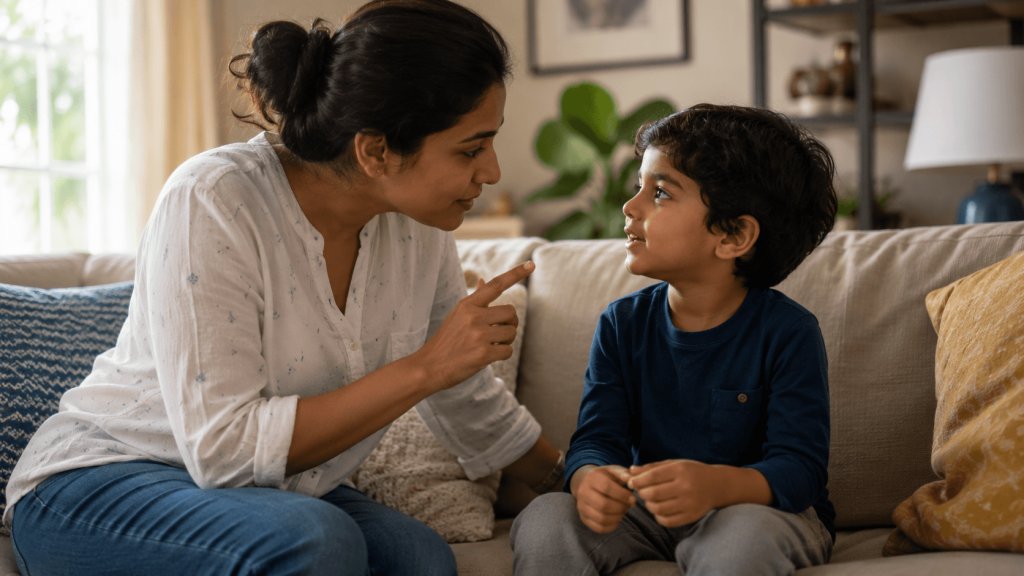
    As new parents, we all want to raise happy, well-adjusted children. We often hear terms like “gentle parenting” and “positive discipline,” which sound wonderful, but sometimes it’s easy to confuse them with a hands-off approach. You might wonder if being too “gentle” means letting your child do whatever they want, leading to a common question: what’s the difference between gentle parenting vs permissive parenting?

    It’s a valid concern. Many parents worry about striking the right balance – being warm and responsive without becoming overly lenient. The truth is, while both approaches prioritize a loving connection, the presence (or absence) of clear boundaries is what truly sets them apart. Here’s how to understand this crucial distinction and empower your child effectively.

    Understanding Gentle Parenting: Connection with Clear Limits

    Gentle parenting is all about building a strong, respectful connection with your child, guiding them with empathy and understanding. It acknowledges that kids are still learning and growing, and often, what looks like “misbehavior” is just them trying to communicate an unmet need or a skill they haven’t quite mastered yet.

    At its heart, gentle parenting means responding to your child’s feelings and needs. It’s about helping them learn to manage their emotions and figure out how to solve problems. It’s not about avoiding consequences, but making sure those consequences are logical, respectful, and focused on teaching, not just punishing. Think of yourself as your child’s emotional coach, helping them navigate their big feelings and the world around them.

    Key Pillars of Gentle Parenting:

    • Empathy: Acknowledging and validating your child’s feelings, even if you don’t agree with their actions.
    • Respect: Treating your child as an individual with their own thoughts and feelings, and expecting the same respect in return.
    • Understanding: Trying to understand the “why” behind their behavior, rather than just reacting to the behavior itself.
    • Boundaries: Setting clear, consistent, and age-appropriate limits that are communicated kindly but firmly.

    Permissive Parenting: The Absence of Boundaries

    Permissive parenting, on the other hand, often means there aren’t many clear boundaries, rules, or expectations. Parents who lean this way are usually warm and responsive, just like gentle parents. But they tend to avoid confrontation and might give in to their child’s demands to keep the peace or prevent an upset. They might even believe that giving their child total freedom will help them be more creative and independent.

    While the intention is often good – wanting to avoid harsh discipline or just make their child happy – this approach can lead to challenges down the road. Kids raised in permissive environments often struggle with self-regulation, impulse control, and understanding social expectations. They might have a tough time following rules at school or elsewhere because they haven’t learned to respect limits at home.

    The Risks of Permissive Parenting:

    • Difficulty with self-control and emotional regulation.
    • Challenges respecting authority figures and rules.
    • Lower academic performance due to lack of structure.
    • Increased likelihood of engaging in risky behaviors later in life.

    Why Boundaries are Non-Negotiable for Healthy Development

    This is where the difference between gentle parenting vs permissive parenting really stands out. Boundaries aren’t about control; they’re about giving your child a safe, predictable framework where they can truly thrive. Imagine a child learning to walk – they need a stable floor, not a slippery slope. Boundaries are that stable floor.

    When you set clear, consistent boundaries, you’re teaching your child vital life skills. You’re showing them that the world has rules, that their actions have consequences, and that while their needs are important, so are the needs of others. This understanding helps them build emotional intelligence, resilience, and a strong sense of security.

    What Boundaries Teach Your Child:

    • Safety: “We hold hands in the parking lot so you stay safe.”
    • Respect: “We don’t hit our friends because it hurts them.”
    • Self-Regulation: “You can be upset, but we don’t throw toys.”
    • Responsibility: “It’s your job to put your clothes in the hamper.”
    • Structure: “Bedtime is at 8 PM so your body gets enough rest.”

    Setting Boundaries the Gentle Way

    So, how do you set boundaries without yelling or using punishments? It’s a balancing act, but you absolutely can be firm and kind at the same time. Remember, the goal is to teach, not to shame or scare.

    1. Be Clear and Consistent

    Kids do best with predictability. State your boundaries simply and clearly. For example, say, “We eat dinner at the table,” instead of, “Maybe we’ll eat at the table, if you want.” Once you set a boundary, stick to it. Being inconsistent just confuses kids and often leads to more power struggles.

    2. Explain the “Why” (Age-Appropriately)

    Instead of just saying “no,” explain the reason behind the boundary. “We don’t jump on the sofa because you could fall and get hurt.” For older children, you can even involve them in discussing the “why.” This helps them understand the logic and feel more invested in following the rule.

    3. Offer Choices (Within Limits)

    Giving choices empowers children and often reduces resistance. “Do you want to wear the blue shirt or the red shirt?” is better than just, “Are you going to get dressed now?” If it’s bedtime, asking, “Do you want to read one book or two before lights out?” gives them some control within the established limit.

    4. Use Natural and Logical Consequences

    Instead of punishment, focus on consequences that are directly related to the behavior. If your child refuses to put away their toys, a logical consequence might be that you put those toys away for a short time. If they spill milk because they were running, the natural consequence is they help clean it up. Keep consequences short-term and immediate for younger children.

    According to the Indian Academy of Pediatrics (IAP), positive discipline and clear boundaries are essential for fostering a child’s healthy emotional and social development.

    Empathy and Firmness: A Parent’s Nuskha

    Think of it like preparing a delicious dal – you need both the warmth of the spices and the structure of the lentils to make it just right. Similarly, gentle parenting requires both deep empathy and unwavering firmness. There will be days when your child pushes every button, and your patience wears thin. That’s perfectly normal. Take a deep breath, step back if you need to, and then reconnect with your child. “I see you’re upset that you can’t have another gulab jamun, and I understand it’s hard. But we’ve had enough for today.”

    This approach validates their feelings (“I see you’re upset”) while holding the boundary (“but we’ve had enough”). It teaches them that their feelings are okay, even when their desires can’t always be met. This is the heart of gentle discipline – guiding them through their emotions and teaching them how to navigate disappointment and limits respectfully.

    Finding the sweet spot between nurturing your child’s spirit and providing the structure they need doesn’t have to feel overwhelming. It’s a learning process for both you and your little one, and every family finds their unique rhythm. Remember, you’re building a foundation of trust and respect that will last a lifetime.

    As your family grows and changes, having easy access to daily essentials like baby food, diapers, personal care items, and parenting necessities can make routines smoother. Platforms like OZi help busy parents manage everyday needs more conveniently while focusing on what matters most, spending quality time with their little one.
    Frequently Asked Questions

    What is the main difference between gentle parenting and permissive parenting?

    The main difference comes down to boundaries. Gentle parenting combines empathy and connection with clear, consistent boundaries and expectations, which helps children learn self-regulation. Permissive parenting is also warm and loving, but it lacks firm boundaries, often leading to children struggling with self-control and respecting rules.

    Can gentle parenting lead to spoiled children?

    No, not if you practice it correctly. Gentle parenting, when paired with clear and consistent boundaries, actually teaches children respect, empathy, and self-control. Kids often get “spoiled” from a lack of boundaries, not from empathy or connection.

    How do I set boundaries without being harsh?

    Set boundaries clearly and calmly. Explain the “why” in a way your child can understand, offer limited choices, and use natural or logical consequences instead of punishment. The key is to be firm about the boundary but kind and empathetic in how you deliver it.

    Is it ever okay to say “no” as a gentle parent?

    Absolutely! Saying “no” is a crucial part of setting boundaries in gentle parenting. The difference is how you say it – with empathy and a brief explanation, rather than just a harsh, unexplained refusal. For example, “No, we can’t have another biscuit right now; we’ll have dinner soon.”

    What if my child throws a tantrum after I set a boundary?

    Tantrums are a normal part of a child’s development, especially when they hit a limit they don’t like. With gentle parenting, you acknowledge their feelings (“I see you’re really angry right now”) while still holding the boundary. Stay calm, offer comfort, and let them process their emotions without giving in to their demand.

    How can I be consistent with boundaries when I’m exhausted?

    Consistency is tough, especially when you’re tired. Try to pick a few key boundaries that are non-negotiable for your family and focus on those first. Get your partner or other caregivers on board so everyone is on the same page. Remember, even imperfect consistency is better than none at all.

  • Safe Baby Sleep Guide: TOG Ratings, Swaddles & Sleep Sacks Explained

    Safe Baby Sleep Guide: TOG Ratings, Swaddles & Sleep Sacks Explained

    Welcoming a new baby comes with countless questions especially around sleep. From understanding TOG ratings to choosing between swaddles for newborns and baby sleep sacks, many parents find themselves wondering what’s actually safest and most comfortable for their baby.

    Should your baby wear a sleep sack in summer? What’s the right room temperature? Is swaddling always safe? And how do you know if your baby is too hot or too cold at night?

    This safe baby sleep guide breaks it all down in simple terms. We’ll explain what a TOG rating is, how to dress your baby for sleep, the difference between swaddles and sleep sacks, and the safest baby sleep practices to follow during those important early months. The good news? Safe baby sleep doesn’t have to be complicated. With the right sleepwear, room temperature, and setup, bedtime can feel much more manageable.

    What is a TOG Rating?

    If you’ve been shopping for baby sleepwear, you’ve probably seen terms like 1.0 TOG or 2.5 TOG and wondered what they mean. TOG (Thermal Overall Grade) is a measurement used to show how warm a fabric or baby sleep product is. Simply put, the higher the TOG number, the warmer the material.

    Understanding TOG ratings explained can help parents choose appropriate sleepwear without over-layering or overheating their baby.

    Instead of piling on blankets, which are not recommended for infants, many parents use TOG-rated swaddles or sleep sacks to maintain a safe and comfortable sleep temperature.

    Here’s a simple guide to common TOG ratings:

    • 0.2–0.5 TOG: Best for hot summer nights and warm rooms, helping keep babies cool and comfortable.
    • 1.0 TOG: Ideal for mild or moderate temperatures, making it a versatile everyday option.
    • 2.5 TOG: Suitable for cooler rooms and winter evenings, offering extra warmth and comfort.
    • 3.5 TOG: Designed for very cold conditions, providing maximum warmth during colder months.

    Remember: room temperature matters more than the season outside. A rainy evening may feel warm indoors, while air-conditioned rooms in summer may still require warmer sleepwear.

    Baby Sleep Temperature Guide: What’s the Ideal Room Temperature?

    One of the biggest concerns parents have is making sure their baby is neither too hot nor too cold. Most sleep experts recommend keeping a baby’s room between 16–20°C for safe and comfortable sleep. A useful rule of thumb is: Dress your baby in one light layer more than what an adult would comfortably wear in the same room.

    If your baby seems sweaty around the neck or chest, has flushed cheeks, or damp hair, they may be too warm. On the other hand, cold hands and feet are often completely normal and don’t always indicate discomfort. This baby sleep temperature guide can help:

    Warm Rooms (24°C+)

    • Lightweight cotton onesie
    • 0.2–0.5 TOG sleepwear

    Moderate Temperatures (20–24°C)

    • Cotton sleepsuit
    • 1.0 TOG sleep sack or swaddle

    Cooler Rooms (16–20°C)

    • Long-sleeve bodysuit
    • 2.5 TOG sleep sack

    Very Cold Conditions

    • Layered sleepwear with 3.5 TOG products if needed
    • Avoid heavy blankets in the crib

    Keeping your baby comfortable without overheating is one of the key parts of safe sleep for babies.

    Swaddles for Newborns: Why Babies Love Them

    Swaddling has been used for generations because many newborns naturally feel calmer when wrapped snugly. A swaddle recreates the cozy, secure feeling of the womb and helps reduce the startle reflex (Moro reflex) that can wake babies suddenly during sleep.For many families, swaddles for newborns can help babies settle faster and sleep for slightly longer stretches especially during the first few months.

    Benefits of Swaddling

    • Helps calm the startle reflex
    • Creates a cozy, womb-like feeling
    • May help newborns settle faster
    • Can improve short sleep stretches

    However, safe swaddling matters.The swaddle should feel snug around the chest but remain loose around the hips and legs to allow healthy movement. Breathable fabrics such as cotton or muslin are usually preferred because they help regulate body temperature.

    Most importantly, swaddling is only meant for the newborn phase. Once babies begin showing signs of rolling over, often between 2 to 4 months parents should stop swaddling immediately. Sleep recommendations can vary depending on a baby’s age and health needs, so it’s always a good idea to consult your pediatrician if you’re unsure.

    Baby Sleep Sacks: A Safer Alternative to Blankets

    As babies grow more active, baby sleep sacks often become the next step after swaddling. A sleep sack is essentially a wearable blanket that stays securely on your baby throughout the night. Unlike loose bedding, which can bunch up or move around, sleep sacks stay in place and are often considered a safer sleep option.

    Benefits of Baby Sleep Sacks

    • Reduce the need for loose blankets
    • Help maintain a comfortable temperature
    • Allow arm movement for growing babies
    • Support safer sleep habits
    • Stay securely on during the night

    Many parents continue using sleep sacks beyond infancy because they help maintain sleep routines and prevent babies from kicking blankets away.
    When choosing a sleep sack, look for:

    • The correct TOG rating
    • Breathable fabric
    • A snug but comfortable neck and arm fit
    • Proper sizing for your baby’s age

    A well-fitted sleep sack should never ride up over a baby’s face.

    Swaddle vs Sleep Sack: What’s the Difference?

    Many new parents wonder about swaddle vs sleep sack, and the answer usually depends on your baby’s age and development stage.

    Swaddle

    Best for: Newborns (0–3 months)

    • Restricts arm movement gently
    • Helps calm newborn reflexes
    • Creates a womb-like feeling
    • Ideal during the earliest months

    Sleep Sack

    Best for: Babies who can roll or move more freely

    • Allows natural arm movement
    • Supports safer mobility during sleep
    • Keeps babies warm without blankets
    • Suitable for longer-term use

    A simple rule: swaddles for newborns, sleep sacks for growing babies.

    Safest Baby Sleep Practices Every Parent Should Follow

    Following a few simple habits can make a big difference when it comes to safe sleep for babies.

    Safest Baby Sleep Practices

    • Always place babies on their back to sleep
    • Use a firm mattress with a fitted sheet
    • Avoid pillows, cushions, and loose blankets
    • Keep soft toys out of the crib
    • Maintain a comfortable room temperature
    • Stop swaddling once rolling begins
    • Use breathable sleepwear suitable for the season

    The safest crib setup is usually the simplest one.

    1. Common Baby Sleep Mistakes Parents Should Avoid

    Even loving, careful parents sometimes make sleep mistakes without realizing it.

    1. Overdressing Babies

    Babies don’t regulate body temperature as efficiently as adults. Too many layers can quickly cause overheating.

    1. Using Loose Blankets

    Blankets may feel cozy, but they are not recommended for infant sleep because they can shift during the night.

    1. Continuing to Swaddle Too Long

    Once babies begin attempting to roll, it’s time to transition to arm-free sleepwear.

    1. Dressing for Weather Instead of Room Temperature

    Indoor conditions matter far more than outdoor weather. Air conditioning, heaters, and fans can all change how warm your baby feels.

    How to Choose the Right Baby Sleepwear

    Choosing the right baby sleepwear guide often comes down to three things:

    1. Your Baby’s Age: Newborns may benefit from swaddles, while older babies are often safer in sleep sacks.

    2. Room Temperature: Use TOG ratings to match indoor conditions.

    3. Comfort & Breathability: Look for lightweight, soft fabrics like cotton or muslin that support airflow.

    Creating a safe sleep setup for your baby doesn’t have to feel overwhelming. Understanding TOG ratings, knowing the difference between swaddles for newborns and baby sleep sacks, and following simple sleep safety practices can help make bedtime easier for both babies and parents.

    Every baby develops differently, and what works during the newborn stage may change quickly over the next few months. Staying flexible and paying attention to your baby’s comfort can go a long way.

    At OZi, we offer a wide range of baby essentials, sleepwear, newborn care products, and everyday parenting must-haves, all delivered to your doorstep in minutes, whenever you need them.

    Frequently Asked Questions 

    What does TOG mean in baby sleepwear?

    TOG stands for Thermal Overall Grade, which measures how warm a fabric or sleep product is. Higher TOG ratings provide more warmth.

    Are sleep sacks safer than blankets?

    Yes. Baby sleep sacks are generally considered safer because they stay securely on the baby and reduce risks associated with loose blankets.

    When should parents stop swaddling?

    Parents should stop swaddling as soon as babies begin attempting to roll over, usually between 2–4 months.

    What room temperature is safest for baby sleep?

    Most experts recommend keeping a baby’s room between 16–20°C for comfortable sleep.

  • When Do Babies Crawl? Milestones, Readiness Signs & Easy Tips

    When Do Babies Crawl? Milestones, Readiness Signs & Easy Tips

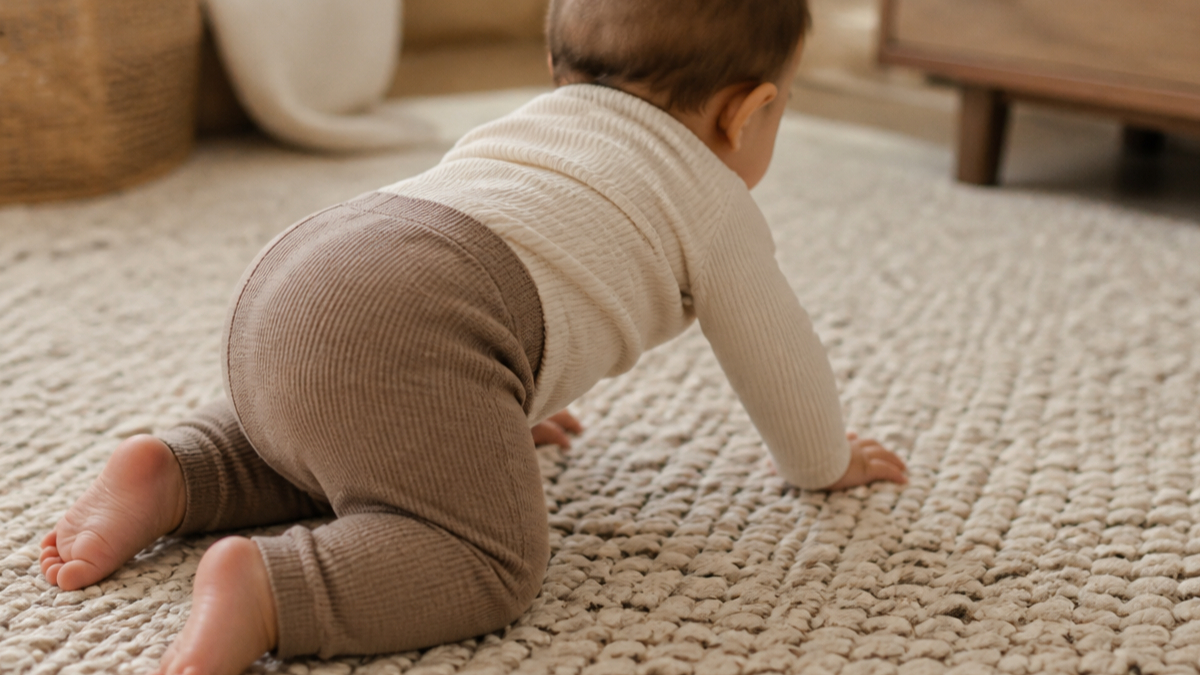
    Babies grow and change so quickly that every milestone feels exciting, and crawling is one of the biggest. It marks the beginning of your baby’s journey toward independence, helping strengthen muscles, coordination, and confidence. But one question many parents ask is, when do babies crawl?

    The answer is, every baby develops at their own pace. Some babies begin crawling as early as 6 months, while others may take until 10 months or even skip crawling entirely and move straight to walking. While timelines vary, understanding the signs baby is ready to crawl and knowing how to support the process can make this stage smoother and more fun for both parent and baby.

    In this blog, we’ll explore baby crawling milestones, readiness signs, practical ways to encourage crawling, and how the right toys can motivate movement and exploration.

    When Do Babies Crawl?

    Most babies start crawling between 6 and 10 months of age, though there’s a wide range of what’s considered normal. Before crawling begins, babies typically go through smaller developmental stages that prepare them for movement.

    Here’s a rough milestone timeline:

    • 0–3 months: Builds neck and upper body strength during tummy time
    • 4–6 months: Starts rolling over and pushing up on arms
    • 6–8 months: Rocks back and forth on hands and knees
    • 7–10 months: Begins crawling, scooting, or creeping

    Some babies crawl traditionally on hands and knees, while others invent unique methods like:

    • Army crawling: Pulling themselves forward on their tummy
    • Bottom shuffling: Scooting while sitting
    • Rolling: Using rolling motions to move around
    • Bear crawling: Crawling with straight arms and legs

    Remember, there’s no ‘perfect’ way to crawl. What matters most is steady progress in mobility and strength.

    Signs Baby is Ready to Crawl

    Wondering if your little one is getting close to crawling? Babies often show physical and behavioral clues before taking off. Here are the most common signs baby is ready to crawl:

    1. Stronger Neck and Head Control

    Your baby can comfortably hold their head up during tummy time and look around with ease. This upper-body strength is essential for supporting crawling movements.

    2. Rolling Over Frequently

    If your baby is rolling from tummy to back or back to tummy regularly, it means they’re developing the coordination needed for mobility.

    3. Pushing Up During Tummy Time

    Babies preparing to crawl often push up on their hands or forearms, almost like a mini push-up. This strengthens shoulder and arm muscles.

    4. Rocking on Hands and Knees

    One of the biggest signs is when your baby starts getting into a crawling position and rocking back and forth. It may look funny, but this movement helps them practice balance.

    5. Increased Curiosity

    Does your baby suddenly seem determined to reach toys, pets, or people? Curiosity is often a major motivator for crawling.

    6. Scooting or Moving Backward

    Many babies accidentally move backward before they figure out how to move forward. It’s completely normal and often part of the learning process.

    7. Pulling Toward Objects

    If your baby stretches, reaches, or tries hard to grab objects just out of reach, they may be preparing for crawling.

    What if Your Baby isn’t Crawling Yet?

    Parents naturally compare milestones, but development rarely follows a strict schedule. If your baby isn’t crawling by 8 or 9 months, it doesn’t automatically mean something is wrong. Some babies simply take longer, while others skip crawling entirely and move straight to standing or walking.

    However, consider speaking with your pediatrician if your baby:

    • Shows little interest in movement by 9–10 months
    • Seems very stiff or very floppy
    • Uses one side of the body significantly more than the other
    • Isn’t rolling, sitting, or bearing weight on arms

    In most cases, patience and practice are enough.

    How to Encourage Your Baby to Crawl

    Once your baby starts showing readiness signs, there are simple ways to support their development naturally.

    1. Prioritize Tummy Time

    Tummy time is one of the best activities for preparing babies to crawl. When babies spend time on their stomach, they strengthen important muscles in the:

    • Neck
    • Shoulders
    • Arms
    • Back
    • Core

    These muscles are essential for lifting the body and moving forward.
    Tips for better tummy time:

    • Start with a few minutes daily and gradually increase
    • Use colorful mats or mirrors for engagement
    • Lie on the floor with your baby to make it interactive
    • Choose times when your baby is alert and happy

    Even short tummy time sessions can make a big difference.

    2. Place Toys Just Out of Reach

    A simple but effective trick, motivate movement through curiosity. Place a favorite toy slightly beyond your baby’s reach so they have to stretch, scoot, or move toward it. The goal isn’t frustration, it’s gentle encouragement.

    Try placing:

    • Soft rattles
    • Musical toys
    • Light-up sensory toys
    • Plush toys with textures

    As babies become more interested in reaching objects, they naturally begin experimenting with movement.

    3. Create Safe Floor Space

    Babies need room to practice. Instead of spending too much time on swings, bouncers, or carriers, allow supervised floor play where your baby can explore freely. A baby-safe space with soft mats can encourage more movement and experimentation.

    4. Use Mirrors for Motivation

    Babies love faces, including their own. A baby-safe mirror placed during tummy time often encourages babies to lift their heads, push up, and move closer.

    5. Crawl With Your Baby

    Yes, really. Getting on the floor and demonstrating crawling movements can encourage imitation. Babies learn by watching caregivers, and your excitement may motivate them too.

    6. Celebrate Effort, Not Perfection

    Every wiggle, scoot, and reach counts. Even if progress feels slow, positive encouragement helps build confidence.

    Toys Play a Huge Role in Motivating Babies to Crawl

    One of the easiest ways to inspire movement is through toys to encourage crawling. Babies are naturally curious. When something lights up, moves, plays music, or feels interesting, they’re often motivated to go after it. The right milestone-specific toys can turn crawling practice into playtime.

    Best Toys to Encourage Crawling

    1. Rolling Balls: Soft sensory balls that move slightly when touched encourage babies to chase and reach.
    2. Musical Toys: Toys that play sounds or music when activated can motivate babies to move closer.
    3. Activity Rollers: Rollers designed for tummy time often spin or make sounds, encouraging pushing and movement.
    4. Interactive Crawling Toys: Some toys move slowly across the floor or light up, giving babies a fun reason to follow.
    5. Soft Building Blocks: Stacking and knocking down blocks can encourage reaching, pivoting, and movement.

    The key is choosing age-appropriate, milestone-specific toys that match your baby’s developmental stage.

    For busy parents, finding the right developmental toys quickly can feel overwhelming. Platforms like OZi make it easier to shop for baby essentials and milestone-specific toys, with convenient delivery in as little as 60 minutes, perfect when your little one suddenly enters a new developmental phase.

    Safety Tips Once Crawling Begins

    The moment babies become mobile, curiosity skyrockets. Before crawling officially starts, take time to baby-proof your space, because crawling babies move faster than most parents expect.

    • Cover electrical outlets
    • Secure furniture edges
    • Remove choking hazards from floors
    • Install safety gates near stairs
    • Keep cleaning products locked away
    • Anchor unstable furniture

    So, when do babies crawl? Most little ones begin between 6 and 10 months, but every baby develops differently. Watching for signs that the baby is ready to crawl, like rocking, reaching, and stronger tummy-time skills can help you know when this exciting milestone is approaching.

    The best way to support your baby is through plenty of tummy time, safe floor exploration, gentle encouragement, and engaging toys to encourage crawling. Small changes like placing toys just out of reach can make a big impact.

    And when your baby is ready for their next milestone, having the right developmental toys on hand matters. You can conveniently explore baby essentials and milestone-specific toys on OZi and get them delivered in 60 minutes, helping you stay one step ahead of your growing little explorer.

    Frequently Asked Questions

    1. When do babies crawl on average?

    Most babies start crawling between 6 and 10 months, though some may begin earlier or later.

    2. What are the first signs baby is ready to crawl?

    Common signs include rocking on hands and knees, pushing up during tummy time, rolling over frequently, and trying to reach objects.

    3. Can babies skip crawling?

    Yes. Some babies skip crawling and move directly to pulling up, cruising, or walking.

    4. What toys encourage babies to crawl?

    Rolling balls, musical toys, sensory toys, activity rollers, and interactive moving toys can motivate babies to move.

    5. Does tummy time help babies crawl?

    Absolutely. Tummy time strengthens muscles needed for crawling, including the neck, shoulders, arms, and core.

  • Crib vs. Cot: What’s the Difference & Which is Best for Your Baby?

    Crib vs. Cot: What’s the Difference & Which is Best for Your Baby?

    Preparing a safe and comfortable sleeping space is one of the biggest decisions new parents make. But once you begin shopping, one question often comes up: crib vs cot which one is actually better for your baby?

    At first glance, they may seem like the same thing. Both are designed to give babies a secure place to sleep, and the terms are often used interchangeably in different countries. However, there are some important differences in size, design, longevity, and functionality. If you’re wondering about the difference between crib and cot, this guide breaks it all down, so you can confidently choose the right sleeping option for your baby and your home.

    Crib vs Cot: What’s the Main Difference?

    The biggest distinction in the crib vs cot comparison often comes down to design, size, and regional terminology. In many countries, especially the UK, Australia, and India, a cot is the standard baby bed with enclosed sides designed for infants and toddlers.

    In the United States, however, the word crib is more commonly used for essentially the same product. That said, there are still practical differences parents may notice while shopping.

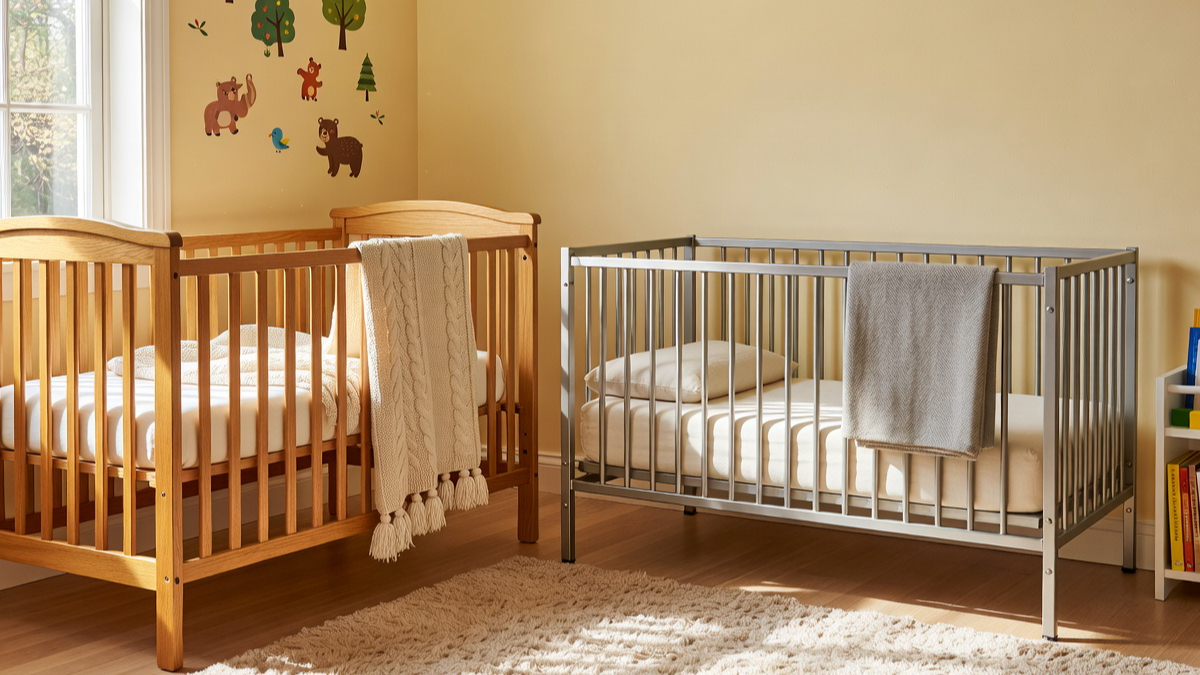
    A Baby Crib Typically:

    • Has a slightly smaller, compact design
    • May come with adjustable mattress heights
    • Often converts into toddler beds in modern designs
    • Is commonly marketed in North America

    A Baby Cot Usually:

    • May be slightly larger or more spacious
    • Often has sturdier wooden designs
    • Can last longer into toddler years
    • Is commonly used terminology in India, the UK, and Australia

    For many parents, the decision between a crib or cot for a baby comes down to room space, budget, and how long they plan to use it.

    What is a Crib?

    A crib for a baby is a specially designed enclosed sleep space made to keep infants safe during sleep. Many modern cribs also convert into toddler beds, making them a longer-term investment.

    Cribs usually feature:

    • High protective rails
    • A firm baby mattress
    • Adjustable mattress levels
    • Compact nursery-friendly dimensions

    Benefits of a Baby Crib

    • Space-saving for smaller nurseries
    • Adjustable mattress height for easier access
    • Safer enclosed sleeping space
    • Convertible options available

    Cribs are often ideal for parents living in apartments or homes where nursery space is limited.

    What is a Cot?

    A cot for a newborn or infant is also a dedicated sleeping bed with enclosed sides, but it may be slightly larger and more versatile depending on the design. Many parents prefer cots because they feel more spacious and can often accommodate growing babies for a longer period.

    Benefits of a Baby Cot

    • More room for movement
    • Often durable and long-lasting
    • Comfortable for extended use
    • Suitable for larger nurseries

    Some cots can transition into toddler beds or day beds, offering added functionality.

    Crib vs Cot Comparison

    If you’re still confused about baby crib vs cot, here’s an easy comparison:

    Size

    Crib: Usually more compact and space-efficient.
    Cot: Often slightly larger and roomier.

    Longevity

    Crib: May last into toddlerhood if convertible.
    Cot: Often suitable for extended use due to larger size.

    Room Space

    Crib: Better for smaller rooms or apartments.
    Cot: Better for spacious nurseries.

    Design

    Crib: Modern, compact, and minimalist.
    Cot: Traditional and often sturdier-looking.

    Price

    Crib: Can vary widely depending on convertible features.
    Cot: May cost more due to size and materials.

    At the end of the day, both are safe sleep solutions when chosen correctly.

    Which is Best for a Newborn?

    If your baby is still in the newborn stage, either option can work safely, as long as it follows sleep safety guidelines. The best sleeping option for baby should include:

    • A firm mattress
    • Proper mattress fit without gaps
    • Breathable bedding
    • Sturdy construction
    • Safety-certified materials

    Whether you choose a crib or cot, avoid:

    • Loose blankets
    • Pillows
    • Cushions
    • Stuffed toys in the sleep area

    A safe sleep setup matters far more than the label attached to the furniture.

    Factors to Consider Before Choosing a Crib or Cot

    Before choosing between a crib and a cot, think about your space, budget, and how long you plan to use it.

    1. Room Size

    If you have a small nursery, a crib may be a better choice since it usually takes up less space. For larger rooms, a cot can offer more comfort and room for your baby to grow.

    2. Budget

    A convertible crib or cot may cost more initially but can save money in the long run by adapting to your child’s growing needs.

    3. Baby’s Growth

    Some babies outgrow compact sleep spaces quickly. If you want a longer-term option, a larger cot may be more practical.

    4. Portability

    Some cribs are easier to move around, making them convenient for parents who want flexibility during the newborn stage.

    Ultimately, the best choice depends on your nursery size, lifestyle, and what feels most practical for your family.

    Nursery Sleep Essentials to Pair with a Crib or Cot

    Choosing the right baby sleep furniture is only one part of creating a safe nursery. Here are a few nursery sleep essentials worth considering:

    Safe Sleep Basics

    • Firm mattress
    • Waterproof mattress protector
    • Fitted sheets
    • Breathable sleepwear
    • Baby monitor (optional)

    Keep the sleep setup simple and clutter-free for safer rest.

    Safety Tips for Baby Sleep Furniture

    Regardless of whether you choose a crib or cot, safety should always come first.

    Safest Baby Sleep Practices

    • Always place babies on their back to sleep
    • Use a firm mattress with fitted sheets only
    • Avoid soft bedding and pillows
    • Check rail spacing and sturdiness
    • Ensure there are no sharp edges or loose screws

    A safe sleep environment helps babies sleep better, and gives parents greater peace of mind.

    Common Mistakes Parents Make When Buying Baby Beds

    1. Choosing Style Over Safety

    Aesthetic nursery furniture is great, but safety certification matters more.

    1. Buying Too Large for Small Rooms

    Oversized cots may make nurseries feel cramped.

    1. Ignoring Longevity

    Some parents buy temporary solutions only to replace them months later.

    1. Forgetting Mattress Compatibility

    A poorly fitting mattress can create unsafe gaps.

    Choosing between a crib vs cot doesn’t have to feel overwhelming. Both options can provide a safe and comfortable sleep environment when selected thoughtfully.

    The best choice often depends on your nursery space, budget, lifestyle, and how long you want the furniture to last. Whether you choose a compact crib or a spacious cot, prioritizing safety and comfort matters most.

    At OZi, we offer a wide range of baby care essentials, nursery products, and parenting must-haves, all delivered to your doorstep in minutes, so you can spend less time worrying and more time preparing for your little one.

    Frequently Asked Questions 

    Is a crib the same as a cot?

    In many countries, yes. The terms are often used interchangeably, though size and design differences may vary by region.

    Which is better: crib or cot for baby?

    The answer depends on your space, budget, and preferences. Smaller spaces often benefit from cribs, while cots may offer more room and longer use.

    Is a cot safe for newborns?

    Yes, as long as it meets safety standards and includes a firm mattress with no loose bedding.

    Can babies sleep in a crib from birth?

    Yes. A crib designed for infant sleep can safely be used from birth.

    How long can babies use a cot or crib?

    Many babies use them until around 2–3 years old, depending on size and developmental needs.

  • What is the 3-6-9 Rule for Babies? A Simple Parent Guide

    What is the 3-6-9 Rule for Babies? A Simple Parent Guide

    Becoming a parent comes with endless advice, routines, and baby-care ‘rules.’ One parenting method that many new parents hear about is the 3-6-9 rule for babies. While it may sound complicated at first, the idea behind it is actually simple and practical.

    The 3-6-9 rule is commonly used as a flexible guide to help parents understand their baby’s feeding, sleeping, and developmental patterns during the first year. It focuses on three important stages in a baby’s growth; around 3 months, 6 months, and 9 months, when major changes often happen. In this guide, we’ll explain what the 3-6-9 rule means, how it can help parents build routines, and why every baby still develops at their own pace.

    Understanding the 3-6-9 Rule for Babies

    The 3-6-9 rule is not a strict medical formula. Instead, it’s a simple parenting framework that highlights key developmental phases during a baby’s first year. Here’s the basic idea:

    • 3 months: Babies begin developing more predictable feeding and sleeping patterns.
    • 6 months: Many babies start solids and become more physically active.
    • 9 months: Babies become increasingly mobile and socially interactive.

    Parents often use this rule to prepare for changing routines and milestones without feeling overwhelmed. The biggest benefit? It encourages parents to focus on gradual development instead of expecting perfection overnight.

    The 3 Stage: Around 3 Months

    The first three months are often called the “newborn phase.” During this time, babies are adjusting to life outside the womb, and parents are usually adapting to sleepless nights and constant feeding schedules. By around 3 months, many babies begin showing signs of more regular patterns.

    What Changes Around 3 Months?

    Parents may also notice fewer random sleep cycles and more predictable nap times. At this stage, babies may:

    • Sleep for slightly longer stretches at night
    • Feed more efficiently
    • Start smiling and responding socially
    • Become more alert during the day
    • Recognize familiar voices and faces

    Feeding at 3 Months

    Most babies still rely entirely on breast milk or formula. Feeding usually happens every 3–4 hours, though every infant is different. Helpful tips for parents:

    • Watch hunger cues instead of relying only on the clock
    • Avoid overfeeding when babies are simply tired or overstimulated
    • Create a calm feeding environment

    Sleep at 3 Months

    Many babies begin sleeping longer at night, although waking up for feeds is still completely normal. Simple sleep habits can help:

    • Keep lights dim during nighttime feeds
    • Create a gentle bedtime routine
    • Encourage daytime activity and interaction

    The 6 Stage: Around 6 Months

    The 6-month mark is one of the biggest developmental transitions for babies and parents alike. This is when many babies become more active, curious, and ready to explore the world around them.

    Major Milestones Around 6 Months

    Parents may also notice fewer random sleep cycles and more predictable nap times. At this age, babies often:

    • Roll over
    • Sit with support
    • Respond to their name
    • Show stronger emotions
    • Become interested in food

    Starting Solids at 6 Months

    One of the most talked-about parts of the 3-6-9 rule is introducing complementary foods around 6 months. Signs a baby may be ready for solids include:

    • Good head control
    • Interest in watching others eat
    • Ability to sit with support
    • Reduced tongue-thrust reflex

    The goal at this stage is exploration, not replacing milk feeds immediately. Common first foods include:

    • Mashed banana
    • Pureed vegetables
    • Rice cereal
    • Oatmeal
    • Soft fruits

    Sleep Changes at 6 Months

    Sleep patterns may improve around this age, but many babies also experience sleep regressions due to:

    • Teething
    • Growth spurts
    • Increased movement
    • Separation anxiety

    Consistency becomes important here. A regular bedtime routine can help babies feel secure and relaxed.

    The 9 Stage: Around 9 Months

    By 9 months, babies become far more mobile and interactive. This stage is exciting but also physically demanding for parents because babies are eager to move and explore.

    Common 9-Month Milestones

    Many babies may:

    • Crawl or attempt crawling
    • Pull themselves up
    • Babble more clearly
    • Recognize familiar people
    • Show stranger anxiety
    • Develop stronger hand-eye coordination

    This is often when parents realize how quickly their baby is growing from a newborn into an active little personality.

    Feeding at 9 Months

    At this stage, babies usually continue drinking breast milk or formula while eating a wider variety of solids. Parents can also encourage self-feeding skills with safe, soft foods. Meals may include:

    • Soft vegetables
    • Finger foods
    • Fruits
    • Yogurt
    • Small portions of grains and proteins

    Sleep at 9 Months

    Some babies sleep through the night consistently, while others still wake occasionally. Mobility and teething can temporarily disrupt sleep. Helpful strategies include:

    • Keeping bedtime routines consistent
    • Avoiding overstimulation before sleep
    • Offering comfort without creating difficult sleep habits

    Why Parents Like the 3-6-9 Rule

    The popularity of the 3-6-9 rule comes from its simplicity. Instead of worrying about dozens of milestones every week, parents can focus on broader developmental stages.

    Benefits of the 3-6-9 Approach

    The 3-6-9 approach helps parents better understand their baby’s changing needs around feeding, sleep, and development. It creates a more predictable routine, making newborn care feel simpler and less overwhelming for first-time parents.

    1. Reduces Parenting Stress

    New parents often feel pressure to follow perfect schedules. The 3-6-9 framework offers guidance without rigid expectations.

    2. Encourages Routine Building

    The rule helps parents gradually adapt feeding, sleeping, and activity schedules as babies grow.

    3. Supports Development Awareness

    Parents become more aware of physical, emotional, and social changes happening during the first year.

    4. Promotes Flexibility

    Every baby is unique. The 3-6-9 rule works best as a flexible guide rather than a strict timeline.

    Important Reminder: Every Baby Develops Differently

    One of the most important things parents should remember is this. Not all babies follow the exact same schedule. Some babies sleep through the night early. Others take longer. Some crawl at 7 months, while others skip crawling entirely and begin walking sooner. Development depends on many factors, including:

    • Genetics
    • Feeding habits
    • Temperament
    • Environment
    • Prematurity

    Parents should avoid comparing their baby constantly with others online or within family circles. If there are concerns about feeding, growth, or developmental delays, it’s always best to speak with a pediatrician.

    Simple Tips for Following the 3-6-9 Rule

    Here are a few practical ways parents can apply this approach in everyday life:

    Observe Before Scheduling: Babies naturally show patterns over time. Observe your baby’s hunger, sleep, and play cues before forcing routines.

    Focus on Consistency: A simple daily rhythm often works better than strict schedules.

    Prepare for Transitions: Expect changes around 3, 6, and 9 months so routines feel less surprising.

    Prioritize Interaction: Talking, singing, cuddling, and playing support healthy development at every stage.

    Don’t Aim for Perfection: Some days will feel organized, and others will feel chaotic. That’s completely normal.

    The 3-6-9 rule for babies offers a simple way for parents to understand major developmental stages during the first year. By focusing on the changes that commonly happen around 3, 6, and 9 months, parents can feel more prepared for shifting routines, feeding habits, and sleep patterns. Most importantly, this approach reminds parents that baby development is a journey, not a race. Flexibility, patience, and consistent care matter far more than following perfect schedules.

    As your baby grows, having easy access to daily essentials like baby food, diapers, personal care items, and parenting necessities can make routines smoother. Platforms like OZi help busy parents manage everyday needs more conveniently while focusing on what matters most, spending quality time with their little one.
    Frequently Asked Questions 

    Is the 3-6-9 rule medically proven?

    No. The 3-6-9 rule is more of a parenting guideline than a medical standard. It highlights common developmental stages many babies experience.

    Does every baby follow the 3-6-9 pattern?

    No. Babies grow and develop differently. Some may reach milestones earlier or later than others.

    Can the 3-6-9 rule help with sleep training?

    It can help parents understand changing sleep patterns, but it is not a formal sleep-training method.

    Should babies start solids exactly at 6 months?

    Many babies begin solids around 6 months, but readiness varies. Parents should consult their pediatrician before introducing solids.

    What if my baby isn’t meeting milestones?

    Small variations are normal. However, if parents have concerns about development, feeding, or behavior, they should consult a healthcare professional.

  • Foods to Avoid During Pregnancy: The Ultimate 2026 Guide

    Foods to Avoid During Pregnancy: The Ultimate 2026 Guide

    Navigating nutrition during pregnancy in India can feel like a balancing act between modern medical advice and age-old ‘nuskhas’ (home remedies) passed down by elders. One day you’re encouraged to eat for two, and the next, you’re warned that certain fruits might be ‘too hot’ for the body.

    As of 2026, nutrition guidelines in India have become much more specific. The focus has shifted from blanket bans to understanding ‘why’ certain foods pose a risk in our tropical climate. This guide breaks down the essential foods to avoid during pregnancy to stay away from to ensure both you and your baby remain healthy.

    10 Foods to Avoid During Pregnancy 

    From unripe papaya to unwashed produce and street food, here is a list of all the food items along with risks and alternative options, that you should avoid during your pregnancy.

    1. Unripe or Semi-Ripe Papaya

    This is perhaps the most famous pregnancy warning in Indian households, and it is backed by science. Unripe or semi-ripe papaya contains high concentrations of latex and papain.

    • The Risk: These substances can act like prostaglandin and oxytocin, which may trigger uterine contractions or early labor.
    • The Safe Way: Fully ripe papaya (bright yellow/orange) is generally considered safe and is a great source of vitamins, but many Indian doctors suggest avoiding it entirely just to be safe.

    2. High-Mercury Fish (Local & Imported)

    While fish is a great source of Omega-3, certain varieties common in coastal regions or high-end markets contain high levels of methylmercury, which can affect the baby’s developing nervous system.

    • Avoid: Shark (Sura), Swordfish, King Mackerel (Surmai/Vanjaram), and Bigeye Tuna.
    • The 2026 Update: You don’t need to quit fish. Stick to 2 servings a week of low-mercury local favorites like Pomfret, Hilsa, Rohu, or Prawns, provided they are caught in clean waters.

    3. Raw or Partially Cooked Eggs

    Many Indian breakfast favorites or desserts use raw eggs. Pregnancy makes you more susceptible to Salmonella, which can cause severe vomiting and high fever.

    • Avoid: Sunny-side-up eggs (runny yolks), homemade mayonnaise, and raw cake batter.
    • The Safe Way: Ensure your omelets or boiled eggs are firm. Commercial mayonnaise in India is almost always made with pasteurized eggs and is safe.

    4. Unpasteurized Milk

    In many parts of India, fresh from the farm milk is common. However, raw (unpasteurized) milk can harbor Listeria and Salmonella.

    • Avoid: Drinking raw milk directly without boiling it. Also, avoid soft artisanal cheeses or unbranded Paneer if you aren’t sure it was made from pasteurized milk.
    • The Safe Way: Always boil loose milk thoroughly. Branded milk and paneer (like Amul or Mother Dairy) are pasteurized and safe.

    5. Street Food and Unwashed Produce

    The biggest risk with Indian street food isn’t the spice; it’s the water and hygiene. Toxoplasmosis and Listeria live in the soil and contaminated water.

    • Avoid: Pani Puri (due to the water), pre-cut fruit chaat from street vendors, and raw sprouts (which are hard to clean).
    • The Safe Way: If you’re craving street food, make it at home or choose outlets with high hygiene ratings where the water used is filtered.

    6. Excess Caffeine (Chai and Coffee)

    We are a nation of tea lovers, but caffeine passes easily through the placenta. Excessive caffeine intake during pregnancy may increase the risk of low birth weight and other complications. According to the American College of Obstetricians and Gynecologists (ACOG), pregnant women should limit caffeine intake to 200 mg per day.

    The Limit: This roughly equals 2 small cups of Masala Chai or 1 cup of strong filter coffee.
    Note: Remember that chocolate, soft drinks, and energy drinks may also contain caffeine.

    • The Limit: Limit yourself to 200mg per day. This roughly equals 2 small cups of Masala Chai or 1 cup of strong filter coffee.
    • Note: Remember that chocolate and some sodas also contain caffeine!

    7. Uncooked or Rare Meat

    Whether it’s a Seekh Kabab or a steak, undercooked meat can carry parasites that cause infections.

    • The Risk: Undercooked meat is a primary source of E. coli and Toxoplasmosis.
    • The Safe Way: Ensure all kababs and curries are cooked until the meat is no longer pink. Meat should reach an internal temperature of at least 71°C.

    8. Specific Herbs and Spices in Excess

    While Indian spices like turmeric are great, certain herbs used in ‘Kadhas’ or Ayurvedic medicines can be too potent during pregnancy.

    • Avoid: Excessive amounts of Ajwain (carom seeds), Suwa (dill seeds), or Fenugreek (methi) in medicinal doses, as they may stimulate the uterus.
    • The Safe Way: Using these in normal tempering (tadka) or cooking is perfectly fine and safe.

    9. Store-Bought Deli Meats

    Cold cuts like salami, ham, and sausages can harbor Listeria even when refrigerated.

    • Avoid: Eating cold cuts straight from the fridge.
    • The Safe Way: Always fry or sauté sausages and deli meats until they are steaming hot before eating.

    10. Alcohol

    The 2026 medical consensus remains strict: No amount of alcohol is safe during pregnancy. Whether it’s wine, beer, or spirits, alcohol reaches the baby at the same concentration as the mother, posing a risk for Fetal Alcohol Spectrum Disorders.

    Most of your favorite Indian meals are perfectly safe the key is hygiene and heat. The goal of these restrictions isn’t to take away the joy of home cooked meals, but to make sure you and your baby are protected from preventable infections. When in doubt, cook it hot and wash it well.

    Frequently Asked Questions

    1. What foods should be completely avoided during pregnancy?

    Avoid foods with a higher risk of infections or complications, such as unripe papaya, high-mercury fish, raw eggs, unpasteurized milk, undercooked meat, and alcohol.

    2. Is ripe papaya safe to eat during pregnancy?

    Fully ripe papaya is generally considered safe, but many doctors in India recommend avoiding it during pregnancy as a precaution.

    3. Can pregnant women drink tea or coffee?

    Yes, but in moderation. Limit caffeine intake to 200 mg per day, or about 1 cup of strong coffee or 2 small cups of chai.

    4. Is street food safe during pregnancy?

    It’s best to avoid unhygienic street food, especially items made with untreated water or raw ingredients like pani puri or fruit chaat.

    5. What is the safest food rule during pregnancy?

    Stick to freshly cooked food, avoid raw or undercooked items, and wash fruits and vegetables thoroughly before eating.

  • Best High Chairs for Babies in India 2026: Complete Buying Guide

    Best High Chairs for Babies in India 2026: Complete Buying Guide

    Choosing the right high chair for babies is one of the most important decisions you will make as a new parent. It is the place where your baby takes their first bite of solids, discovers new textures, and slowly learns the joy of mealtimes ideally without ending up wearing most of it.

    But with dozens of options across brands, price points, and specifications, the decision is rarely straightforward. Do you go for a compact foldable? A premium convertible that grows with your child for years? A trusted international brand or a well-loved Indian one?

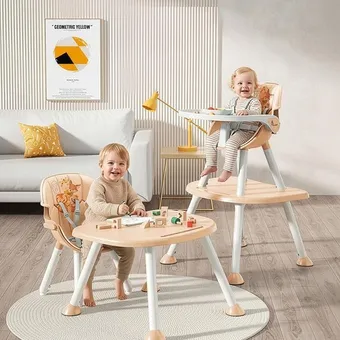
    In 2026, Indian parents have more quality options than ever before. This guide cuts through the noise and brings you the 7 best high chairs available in India, all available on OZi, delivered to your door in 60 minutes, 24×7. Whether you are buying for a 6-month-old just starting solids or looking for a chair that converts into a toddler seat and study table, there is something here for every family and every budget.

    How to Choose the Right High Chair for Your Baby

    1. Safety Harness: Always look for 5-point harness straps at both shoulders, both sides of the waist, and between the legs. This is the gold standard and significantly safer than a 3-point harness.
    2. Adjustability A chair with multiple height settings, a reclinable backrest, and an adjustable footrest will serve your child far longer than a fixed-position chair. Good foot support stabilises your baby’s core and makes mealtimes more comfortable.
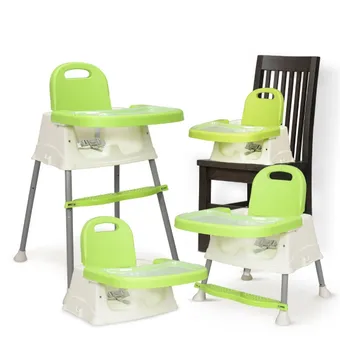
    3. Convertibility A 3-in-1 or 4-in-1 convertible high chair that transitions from a full high chair to a low chair, booster seat, or toddler study table gives you years of use from a single purchase.
    4. Ease of Cleaning Prioritise chairs with a removable, dishwasher-safe tray and machine-washable or wipeable cushion covers. Avoid models with deep crevices where food hides and hardens overnight.
    5. Footprint and Foldability Indian apartments have limited dining space. A compact fold or freestanding fold design saves significant floor space when the chair is not in use.
    6. Safety Certification Look for EN14988 (European standard) or BIS certification. These are independently verified markers of structural safety and material quality not just marketing claims.

    High Chair Buying Checklist

    • 5-point safety harness
    • Anti-tip / anti-skid base
    • BPA-free, non-toxic materials
    • Multiple seat height adjustments
    • Reclinable backrest
    • Adjustable footrest
    • Removable, easy-to-clean tray
    • Washable or wipeable cushion cover
    • Compact fold or small footprint
    • Suitable from 6 months onwards
    • Convertible design for longer use
    • EN14988 / BIS / ASTM safety certification
    • Brand warranty and after-sales support

    7 Best High Chairs for Babies in India (2026)

    1. R for Rabbit Cherry Berry Safari — 3-in-1 Convertible High Chair (6M–7Y)

    R for Rabbit is one of the most trusted baby gear brands in India, and the Cherry Berry Safari is a standout in their lineup. This 3-in-1 chair converts from a standard high chair to a kids’ study table and chair set, meaning one purchase covers your child from the first bite of khichdi all the way through primary school.

    Built from durable PP material with a PU leather cushion, it features a 5-point safety harness, a 3-position adjustable meal tray, and an anti-skid base. The muted beige works well in most home interiors. Excellent long-term value for Indian families who want a chair that truly grows with their child.

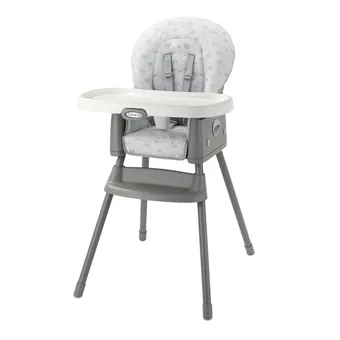
    2. Graco SimpleSwitch High Chair (6M-3Y) 

    Graco has been a globally trusted baby gear brand for decades, and the SimpleSwitch is a masterclass in straightforward design. The 2-in-1 chair converts into a standalone toddler booster seat, the legs detach and store neatly on the seat base, so no parts are ever lost.

    The 3-position reclining backrest supports younger babies during feeding. One-hand tray removal and a machine-washable seat pad make daily use genuinely easy. If you want an internationally tested, no-fuss high chair from a brand that has earned its reputation, the SimpleSwitch delivers.

    3. LuvLap 4-in-1 Convertible Baby High Chair with Footrest

    LuvLap is India’s most loved homegrown baby brand, and their 4-in-1 high chair consistently tops bestseller lists. Certified to European safety standards, it converts between four positions: full high chair, low chair, booster on a dining chair, and floor-level booster.

    The dedicated adjustable footrest is a feature many chairs in this price range skip entirely. Metal legs, a removable washable seat cover, and a 3-point harness complete a well-priced, well-built package. For parents buying their first high chair on a realistic budget, LuvLap is the answer.

    4. Miniture Nubo 2-in-1 Grov High Chair (6M–8Y)

    Miniture brings a Scandinavian design sensibility to Indian baby furniture, and the Nubo Grov is their finest expression of that. Clean lines, minimal form, no visual clutter, it is one of the most aesthetically considered high chairs available in India.

    Built from non-toxic HDPE plastic with a wide anti-slip base, the chair works from infancy through 8 years, one of the longest usability windows on this list. The ergonomic seat with rounded edges supports comfortable extended sitting. If your home decor matters as much as function, this is the one.
    5. Joie Mimzy Recline High Chair (0–3Y)

    The Joie Mimzy Recline is the only chair on this list suitable from birth. Five recline positions  including a near-flat position for newborns progress naturally to an upright seated position as your baby develops. Seven height adjustments and three footrest positions mean it fits almost any table height in an Indian home.

    The oversized tray with one-hand release is generous and practical. The freestanding compact fold is genuinely one-handed. For maximum flexibility from day one, this is our top pick.

    6. StarAndDaisy 4-in-1 Comfort High Chair (6M–3Y)

    StarAndDaisy delivers feature-rich baby gear at accessible price points, and this 4-in-1 chair is a strong example. It converts between a high chair, booster seat with wheels, standard chair, and chair at table with a generous 25 kg weight capacity, among the highest in its segment.

    The one-hand adjustable tray offers three depth positions, the tray is dishwasher-safe, and the stain-resistant cushion wipes clean easily. Height-adjustable metal legs with rubber grip feet ensure stability. A practical, hardworking everyday chair.

    7. Chicco Zest Highchair (6M–7Y)

    Chicco is an Italian heritage baby brand trusted across 120 countries, and the Zest is a benchmark in intelligent design. At just 4.5 kg with a compact fold and tray storage built into the rear legs, it is one of the most space-efficient full-size high chairs for babies in India ideal for apartments where every square foot counts.

    The one-piece seat shell is among the easiest to wipe clean of any chair on this list. Certified free from PFAS, BPA, and phthalates. It transitions across four configurations: high chair, low chair, toddler chair, and youth stool up to 7 years. Moon Grey will look as good at year five as it does on day one.

    The right high chair for your baby supports that journey safely, comfortably and without becoming a cleaning nightmare. Every high chair for babies on this list has been picked for a specific reason, whether its space, budget, design or longevity. The best one is simply the one that fits your home, your baby’s age, and your daily routine. Get all 7 delivered in 60 minutes, download the OZi app.

    Frequently Asked Questions

    1. At what age can a baby start using a high chair?

    Most babies are ready for a high chair around 6 months of age. A child must be able to sit up unassisted with good head and neck control before being placed in a chair. For younger infants, certain ‘newborn-ready’ high chairs with reclining seats can be used from birth.

    2. What safety features are essential when buying a high chair?

    The most critical safety feature is a 5-point harness system to prevent the baby from climbing out or sliding down. Additionally, the chair should have a wide, stable base to prevent tipping and a crotch post or ‘T-bar’ beneath the tray to keep the child securely in place.

    3. Are wooden high chairs better than plastic or metal ones?

    Wooden high chairs are often preferred for their aesthetic appeal and long-term durability. However, plastic and metal chairs are typically lighter and easier to clean, as they often feature dishwasher-safe trays and machine-washable seat pads, making them more practical for daily mess.

    4. How long do babies typically stay in a high chair?

    Most children transition out of a traditional high chair between 18 months and 3 years of age. The transition usually happens once the child becomes too heavy for the chair’s weight limit or shows a desire to sit at the table in a booster seat or a standard chair.

  • Why Sensory Toys Are the Secret to Your Baby’s Brain Growth

    Why Sensory Toys Are the Secret to Your Baby’s Brain Growth

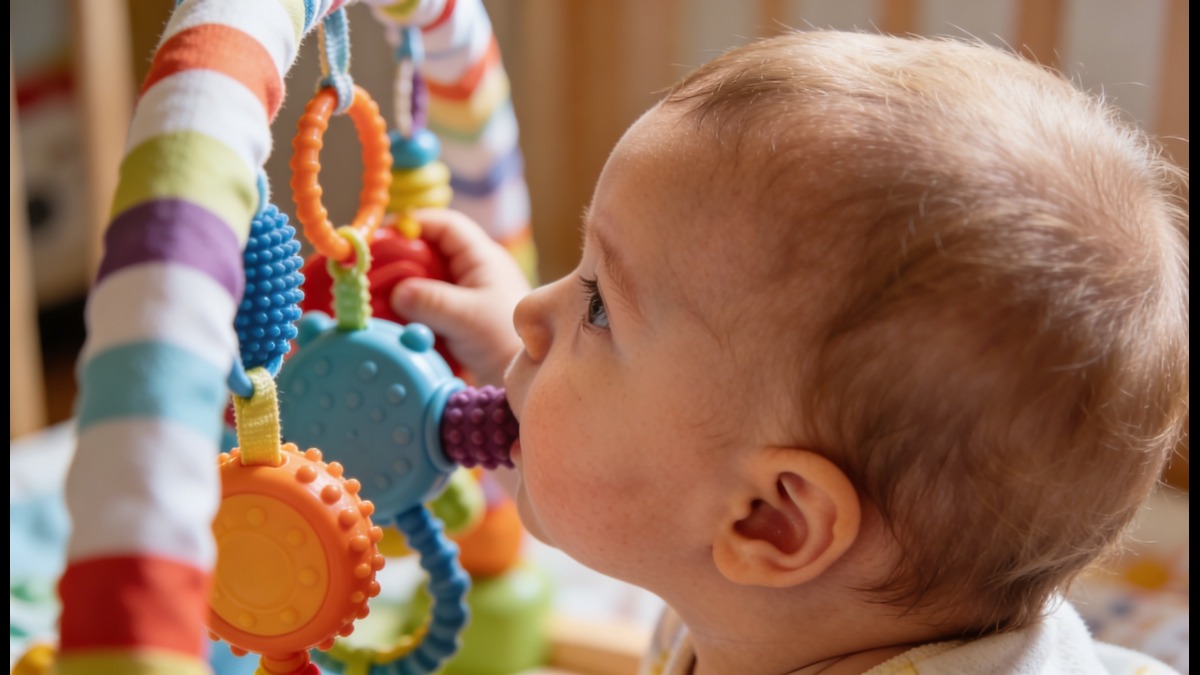
    Every time a baby reaches for a colorful hanging mobile or crinkles a fabric book, something extraordinary happens. Millions of neurons in their brain fire, creating new pathways that form the foundation for all future learning.

    This isn’t just playtime, it’s sensory integration. In the first year of life, babies process the world almost entirely through their senses. Sensory toys for babies are the essential tools that help them make sense of the noise, light, and textures of their new environment.

    What Exactly Are Sensory Toys?

    Sensory toys are designed to engage one or more of the five basic senses; sight, sound, touch, smell, and taste as well as the ‘hidden’ senses like vestibular (balance) and proprioception (body awareness).

    While a traditional toy might just be for entertainment, a sensory toy has a job: to challenge the brain to interpret a physical stimulus.

    4 Benefits of Sensory Play for Infants

    1. Rapid Brain Development

    Babies are born with billions of brain cells, but they lack the ‘wiring’ to connect them. Sensory play acts as the electricity for that wiring. Every new sensation, the coldness of a teething ring or the ‘clack’ of wooden blocks strengthens the neural connections responsible for thought, memory, and language.

    2. Refining Fine and Gross Motor Skills

    Sensory toys encourage babies to use their bodies in new ways.

    • Fine Motor: Grabbing a small tag on a plush toy or poking a soft button.
    • Gross Motor: Reaching for a high-contrast toy during tummy time or crawling toward a rolling ball.

    3. Emotional Regulation and Calming

    Ever wonder why ‘fidget’ toys or soft blankets work so well? Sensory input can be incredibly grounding. Soft textures and gentle, rhythmic sounds (like a rainmaker) can lower a baby’s cortisol levels, helping them transition from a state of fussiness to calm focus.

    4. Language and Cognitive Skills

    Before a baby can say the word ‘rough,’ they must experience the sensation. Sensory play provides the physical context for vocabulary. When caregivers narrate the play, ‘Look at the bright red ball’ the baby begins to link sensory data with verbal labels.

    Choosing the Right Sensory Toy by Age

    0–3 Months: High Contrast and Soft Sounds

    At this stage, vision is blurry and limited to about 8–12 inches.

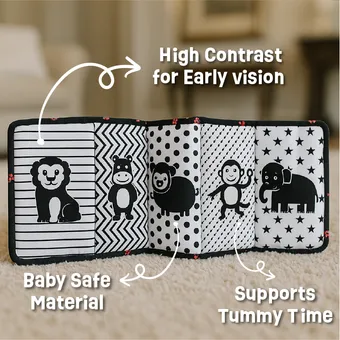
    • Visual: Black-and-white high-contrast cards and mirrors.
    • Auditory: Soft, lightweight rattles and musical mobiles.
    • Goal: Focus, tracking, and early auditory recognition.

    3–6 Months: Grabbing and Mouthing

    As babies gain hand control, they begin to explore with their mouths.

    • Tactile: Multi-textured teething rings and ‘crinkle’ books.
    • Proprioception: Play mats with dangling toys that encourage reaching and pulling.
    • Goal: Hand-eye coordination and oral exploration.

    6–12 Months: Cause and Effect

    Older infants begin to understand that their actions have results.

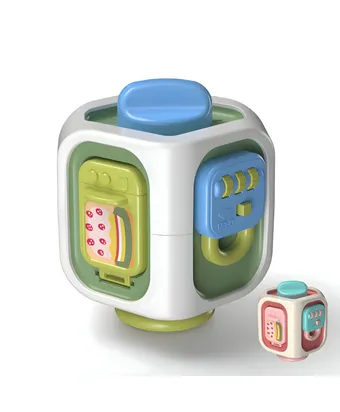
    • Cognitive: Busy boxes with buttons, ‘pop-up’ toys, and stacking cups.
    • Gross Motor: Textured sensory balls that roll away, encouraging crawling.
    • Goal: Problem-solving and spatial awareness.

    Safety Checklist for Sensory Toys

    Since sensory toys often involve diverse materials, safety is the top priority:

    1. Non-Toxic Materials: Ensure all plastics are BPA-free and paints are lead-free (especially for teething toys).
    2. Size Matters: Use the “toilet paper roll” test; if a toy can fit inside the roll, it is a choking hazard.
    3. Durability: Check that small parts like squeakers or “beans” inside plush toys are securely sewn in.

    Frequently Asked Questions

    At what age should sensory play begin?

    Sensory play can begin from birth. For newborns, this includes skin-to-skin contact, singing, and showing high-contrast images. As they grow, more physical toys like rattles and textured balls can be introduced.

    How do sensory toys help with teething?

    Many sensory toys feature varied textures like nubs, ridges, and soft silicone. These provide counter-pressure to sore gums, which distracts the brain from pain while also helping the baby “map” the inside of their mouth.

    Why does a baby put sensory toys in their mouth?

    This is called mouthing. The mouth has more nerve endings than the fingers, making it a baby’s most effective tool for “feeling” whether an object is hard, soft, cold, or textured. It is a vital part of cognitive development.

    What are the best types of sensory toys for newborns?

    For newborns, sensory engagement focuses on high-contrast visual stimuli and gentle auditory input. Black-and-white art cards, unbreakable floor mirrors, and soft-fleece rattles are ideal choices, as they cater to a newborn’s developing eyesight and sensitive hearing without causing overstimulation. 

  • Baby Swaddling in Summer:Dos, Don’ts & Safety Tips

    Baby Swaddling in Summer:Dos, Don’ts & Safety Tips

    Swadding, often recommended as one of the best ways to calm a newborn and improve their sleep quality, but when summer arrives, many parents start to question it. Is baby swaddling in summer safe for babies, or can it lead to overheating?

    And the concern is completely valid. Newborns are more sensitive to temperature changes and cannot regulate heat as effectively as adults. In warmer weather, the risk of overheating makes many parents unsure about whether they should continue swaddling their baby.

    The good news is that swaddling can still be safe during warmer months, as long as it is done correctly. Understanding when to swaddle, what materials to use and how to avoid overheating makes all the difference.

    This blog answers all the questions around swaddling. Is it safe in summer, the benefits, risks and practical tips. Keep reading to know all about it. But before we begin finding out if it’s good for summer or not. Let’s understand what swaddling actually is. 

    H2: What is Swaddling and Why You Should Do it? 

    Swaddling is the practice of wrapping a newborn snugly in a soft cloth or blanket to recreate the secure feeling of the womb. For babies who are adjusting to a completely new environment, this sense of comfort can make a significant difference in their sleep and overall mood.

    Newborns are born with a natural startle reflex (also known as the Moro reflex), which can wake them up suddenly. Swaddling helps reduce these involuntary movements, allowing babies to sleep more peacefully and for longer durations.

    Apart from improving sleep, swaddling also:

    • Provides a sense of safety and comfort
    • Reduces fussiness and crying
    • Helps babies settle faster
    • Supports better sleep routines for parents

    For new parents navigating the early days, swaddling can be one of the simplest yet most effective techniques to soothe a newborn.

    H2: Different Types of Swaddling 

    There isn’t just one way to swaddle a baby. Depending on your baby’s comfort and the weather, you can choose from different styles:

    1. Traditional Swaddle
    This involves wrapping your baby snugly with a cloth blanket, securing the arms while allowing slight leg movement. It’s the most common method.

    2. Arms-Up Swaddle
    Some babies prefer having their hands near their face. This style allows natural movement while still offering comfort.

    3. Sleep Sacks or Swaddle Bags
    These are wearable blankets designed for convenience. They are especially useful for parents who want an easy and consistent swaddling method.

    4. Lightweight Muslin Swaddle
    Perfect for warmer weather, muslin swaddles are breathable and reduce the risk of overheating.

    Choosing the right type depends on your baby’s preference and the surrounding temperature, especially important during summer.

    H2: Is Swaddling Safe in Summer?

    Swaddling in summer is safe,  but only when done carefully. The biggest concern during hot weather is overheating. Babies cannot regulate their body temperature as effectively as adults, which makes them more vulnerable to heat.

    However, swaddling doesn’t need to be avoided entirely in summer. With the right approach such as using breathable fabrics, dressing your baby lightly, and maintaining a comfortable room temperature it can still be a safe and soothing practice.

    The key is balance; comfort without trapping heat.

    H2: Benefits of Swaddling in Summer 

    1. Promotes Better Sleep: Swaddling mimics the snug feeling of the womb, helping babies sleep more soundly even in warmer months when minor discomforts can disrupt rest.

    2. Reduces the Startle Reflex: Babies have a natural Moro (startle) reflex that can wake them suddenly. Swaddling suppresses this, allowing longer, uninterrupted sleep regardless of the season.

    3. Soothes Fussiness & Colic: The gentle pressure of a swaddle can calm an overstimulated or colicky baby, which is especially helpful in summer when heat and new environments may increase irritability.

    4. Regulating Comfort: (Not Just Temperature) Using a lightweight, breathable fabric like muslin or bamboo allows swaddling in summer without overheating, while still providing the emotional security and comfort babies need.

    5. Supports Safe Sleep: Positioning Swaddling keeps a baby’s arms tucked safely, reducing the chance of rolling or repositioning during sleep — an important safety benefit that applies year-round.

    Summer Tip: Always use thin, breathable fabrics, keep the room at 24–26°C, and ensure the baby’s head remains uncovered to prevent overheating.

    H2: How to Swaddle a Baby in Summer (Step-by-Step)

    Learning how to swaddle a newborn correctly is especially important during summer to avoid overheating. Follow these simple steps:

    Step 1: Choose the Right Fabric:  Use a lightweight, breathable cloth like cotton or muslin.

    Step 2: Lay the Swaddle Flat: Spread the cloth in a diamond shape and fold the top corner down slightly.

    Step 3: Position Your Baby: Place your baby on their back with shoulders just below the folded edge.

    Step 4: Wrap One Side: Gently bring one side of the cloth across your baby’s body and tuck it under.

    Step 5: Fold the Bottom Loosely: Bring the bottom up but ensure there is enough room for leg movement.

    Step 6: Wrap the Other Side: Wrap the remaining side across and tuck it securely.

    Important Tip: Keep the swaddle snug around the arms but loose around the hips to allow natural movement and airflow.

    H2: Do’s & Don’ts for Swaddling in Summer 

    Do’s

    1. Use Lightweight, Breathable Fabric Opt for muslin, cotton, or bamboo wraps that allow airflow and prevent heat build-up around the baby.

    2. Keep the Room Cool Maintain room temperature between 24–26°C and use a fan or air conditioning to ensure a comfortable sleep environment.

    3. Dress Baby Minimally Underneath A light onesie or just a diaper under the swaddle is enough. Avoid layering heavy clothing beneath the wrap.

    4. Check for Overheating Regularly Feel the baby’s neck or chest (not hands/feet) to gauge body temperature. Warm, sweaty skin or flushed cheeks are warning signs.

    5. Swaddle Snugly but Not Too Tight Wrap firmly enough to feel secure, but ensure there’s room for the hips and legs to move freely to prevent hip dysplasia.

    6. Always Place Baby on Their Back: Swaddled babies should always be laid on their back to reduce the risk of SIDS.

    Don’ts

    1. Don’t Use Thick or Fleece Blankets Heavy fabrics trap heat and significantly raise the risk of overheating in summer.

    2. Don’t Cover the Baby’s Head The head is a key area for heat release — always keep it uncovered while swaddling.

    3. Don’t Swaddle Once Baby Can Roll Over As soon as a baby shows signs of rolling (usually around 2–3 months), swaddling becomes a safety risk.

    4. Don’t Swaddle Too Loosely A loose swaddle can unravel and become a suffocation hazard during sleep.

    5. Don’t Ignore Signs of Discomfort Excessive crying, rapid breathing, or a very red face may signal the baby is too hot unwrap immediately and cool them down.

    6. Don’t Swaddle for Extended Periods During the Day Give the baby regular breaks from swaddling during daytime to allow free movement and natural development.

    H2: Tips to Swaddle Your Baby in Summer 

    To make swaddling safer and more comfortable during warmer months, keep these practical tips in mind:

    1. Choose the Right Time to Swaddle
    Swaddle your baby mainly during sleep rather than throughout the day.

    2. Use Minimal Layers
    If the weather is very hot, you can skip inner clothing and use just a light swaddle.

    3. Keep the Sleeping Area Cool
    Ensure proper ventilation and avoid direct sunlight in the baby’s room.

    4. Watch for Baby’s Signals
    Every baby is different if your baby seems uncomfortable, adjust accordingly.

    5. Consider Alternatives When Needed
    If temperatures are extremely high, opt for lightweight sleep sacks or breathable babywear instead of traditional swaddling.

    6. Stay Flexible
    Swaddling isn’t mandatory. If your baby sleeps comfortably without it during summer, that’s completely fine.

    Frequently Asked Questions

    1. How to swaddle babies in summer?

    Use a single layer of lightweight muslin fabric and keep the legs loose. Always ensure the neck and face are uncovered and check the back of the neck for overheating.

    1. Which fabric is best for swaddling in summer?

    Muslin cotton is the best choice, breathable, lightweight, and gentle on baby’s skin. Bamboo fabric is a good alternative for babies with sensitive skin. 

    1. When should I stop swaddling my baby?

    Stop swaddling as soon as your baby shows signs of rolling over, typically between 2 and 4 months. Continuing after this point is a safety risk.

    1. Can I use a fan or air conditioner in my baby’s room?

    Yes, both are safe as long as the airflow is not directed at your baby. Keep the room temperature between 24–26°C and dress your baby in a single light layer.

    1. What are some easy swaddling techniques for summer?

    The diamond swaddle and arms-out swaddle are the easiest for summer,  both use minimal fabric and keep your baby cool. The arms-out technique works especially well once your baby starts rolling.